
With Loyalty Day on May 1, Victory in Europe Day on May 8, Military Spouse Appreciation Day on May 12, Armed Forces Day on May 20 and Memorial Day on May 29, this is a big month for the military. Due to the number of days honoring the armed forces, in 1999 Congress designated May as National Military Appreciation Month, according to Military.com. These days of national unity offer an opportunity for everyone to honor, recognize, remember and appreciate all those who have served and continue to serve our country.
- Loyalty Day kicks off the month-long celebration as a day set aside for everyone to reaffirm their loyalty to our great nation and take a moment to reflect on the proud heritage of our unique American freedom.
- Victory in Europe Day commemorates the Allies acceptance of the German surrender to end World War II in Europe.
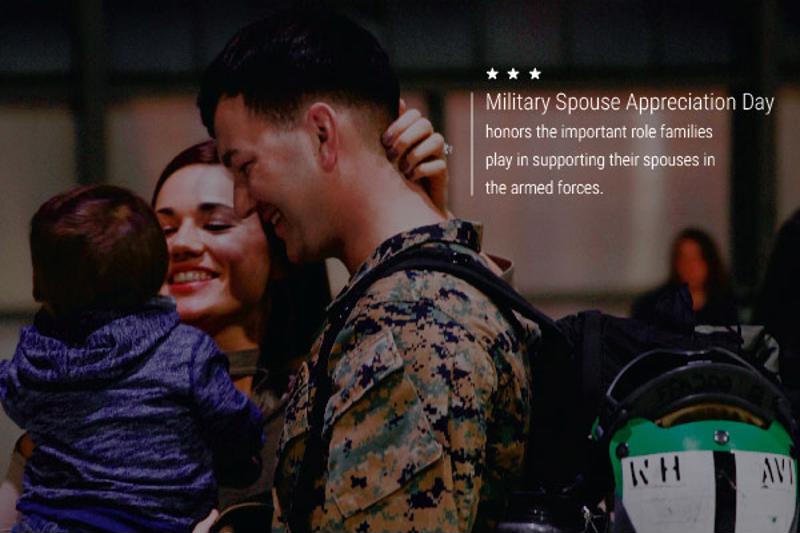
- Military Spouse Appreciation Day honors the important role families play in supporting their spouses in the armed forces.
- Armed Forces Day is when when citizens can show their appreciation and thanks to everyone serving in the U.S. military branches, including the Air Force, Army, Coast Guard, Marines and Navy.
- Memorial Day, while traditionally the kick-off to summer for most people, is one of the most cherished days for remembering and honoring the sacrifices made by those men and women who gave everything for our country.
"Retailers, restaurants and recreational organizations are providing discounts and promotions."
Some of the great benefits during this month
As a way of celebrating National Military Appreciation Month, many retailers, restaurants and recreational organizations provide discounts and promotions for members of the armed forces and veterans.
Home Depot and Lowe's offers a 10 percent discount on all in-store purchases on Memorial Day.
Blue Star Museums, in collaboration with the U.S. Department of Defense, the National Endowment of the Arts and Blue Star Families, offers free admission to military members starting Memorial Day and going through Labor Day.
Various hotels, such as Hilton, Red Roof Inn and Westgate Resorts also offer a 10 percent discount to all active, reserve or retired service members, offering a great incentive to hit the road and take in some much-needed relaxation.
Military families who want to take advantage of these hotel discounts, can take a trip and receive a discount at the following amusement parks and tourist sites:
- California's Great America.
- Carowinds in Charlotte, North Carolina.
- The Cincinnati Zoo.
- Colonial Williamsburg.
- Kings Island.
- Michigan's Adventure.
- Valleyfair.
In addition to these national chains offering great perks for military members and their families, small businesses and local organizations all across the country are also doing their part with various discounts and promotions. From parades to concerts to special events, people everywhere will be showing their support for the brave men and women who keep our country safe.
While most people tend to think of adults when it comes to the armed forces, children and teenagers play an important role in the military family. From dealing with a deployed parent to moving from one base and school to another, military children face their own set of challenges that most kids their age never have to experience. To applaud the commitment and sacrifices made by the youngest members of military families, the Department of Defense Military Community and Family Policy (MC&FP) designated April as the Month of the Military Child.
Spotlight on the military child
Started by Defense Secretary Caspar Weinberger in 1986, all the branches of the armed forces honor the Month of the Military Child in their own way. For instance, the Department of Defense Education Activity (DoDEA) celebrates these brave youths by:
- Implementing strategies designed to prepare DoDEA students more thoroughly for college and career readiness.
- Challenging students to embrace their full potential and excel academically, socially, physically and emotionally.
- Creating the organizational capacity to maximize the effectiveness and efficiency of its model, unified school system.
As noted by National PTA, since the 2001, about 2 million military children have seen one of their parents be deployed. Further, more than 900,000 youths have had one or both of their parents deployed multiple times. Currently, there are 1.2 million children around the world with a parent who's on an active duty.

Supporting military children
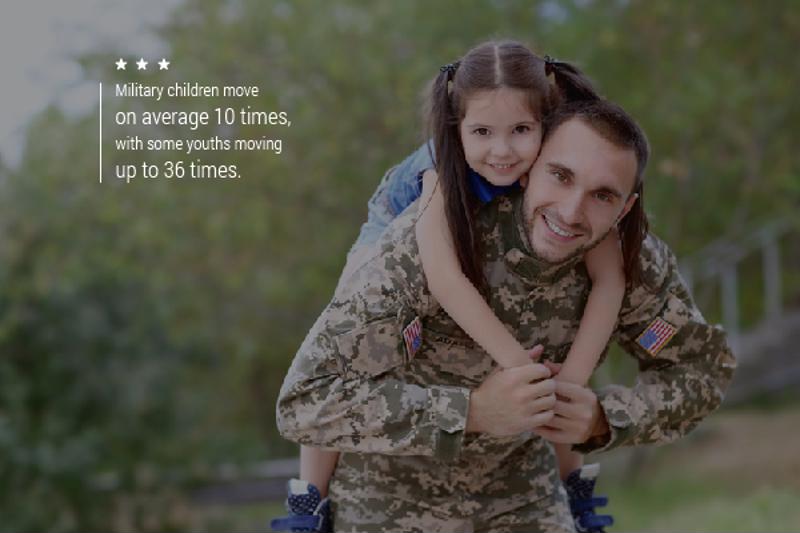
Regularly switching home, communities and schools can place a stressor on military children that other kids don't always have to face. Compared to civilian children, children in a military family will move, on average, about three times more often throughout their youth, the PTA noted. All told, military children move on average 10 times, with some youths moving up to 36 times.
From schools to sports to community programs, there are organizations and groups of all sorts that help children deal with some of the stressors arising from their unique experiences. For instance, the University of Southern California houses an entire department solely dedicated to researching and supporting military children in school. This is extremely helpful, as the PTA noted that it takes a school-wide effort to support military children during their transitions.
In March, the Washington Capitals hockey team invited more than 200 military members and their families to enjoy a night of ice skating at the Kettler Capitals IcePlex in Arlington, Virginia, according to the official blog of the Coast Guard workforce, All Hands. Several players of the team also came out to meet with the families.
One way that families with active duty servicemembers can alleviate some of their children's stress that arises from the constant moving is by adequately preparing them for the transition. All Hands noted that being honest with the children about what is happening should be a top priority. Communicating with children helps reassure them about the move and makes it easier to adjust to the changes. Further, providing fun activities for the trip, whether it's a short plane ride or a cross-country drive, can help.
Another way that organizations and groups show their support is by offering scholarships for military children. From Fisher House, a nonprofit organization that helps servicemembers and their families, to the Corvias Foundation, a private, charitable group, military children have plenty of options to choose from to pursue scholarship opportunities.
While their childhood might be a bit different than their civilian counterparts, military youths enjoy the support and gratitude from everyone for their strength and perseverance during what can sometimes be tough times.
Communication and coordination are crucial following a natural disaster, major accident or other times of crisis. First responders must have the capabilities to effectively and easily relay orders, context and real-time reports on what's happening to quickly deal with the problem at hand. Unfortunately, there are currently more than 10,000 networks for voice communications, most of which do not interoperate, according to AT&T. This leads to major problems when, during an emergency, first responders are unable to, in fact, respond.
To solve this problem, the U.S. Department of Commerce recently contracted AT&T to build a special broadband network specifically for first responders to use during these times of crisis. This nationwide seamless, IP-based, high-speed mobile communication network gives first responders priority access to boost different groups' ability to communicate with others when responding to a crisis. With greater ability to communicate and coordinate, first responders can improve safety and more effectively respond to crises.
Background on the network
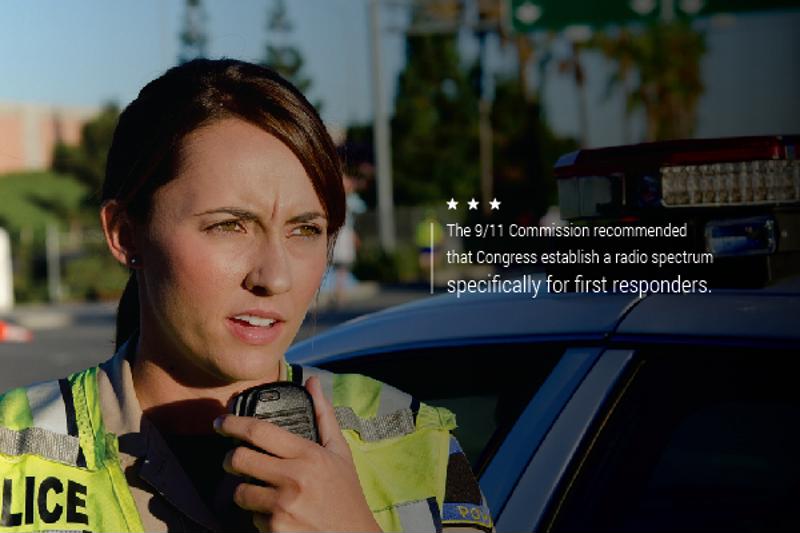
The inception for this network arose from the response to the Sept. 11 terrorist attacks, CNN reported. The 9/11 Commission discovered that emergency responders relied on different radio frequencies during the aftermath, which made communication and coordination efforts between the groups nearly impossible. In response to this, the Commission recommended that Congress establish a radio spectrum specifically for public safety and first responders.
Based on this recommendation, the First Responder Network Authority (FirstNet), an independent group at the Commerce Department, will now partner with AT&T to build this crucial network. AT&T will invest $40 billion to build and operate the network over the next 25 years, while FirstNet will provide an additional $6.5 billion over the next five years.
"Today is a landmark day for public safety across the country and is a prime example of the incredible progress we can make through public-private partnerships," said Secretary of Commerce Wilbur Ross.
AT&T Chairman and CEO Randall Stephenson also hailed the project as a one-of-a-kind project that will greatly improve first responder safety.
"We are honored to work with FirstNet to build a network for America's police, firefighters and EMS that is second to none," said Stephenson. "This is an unprecedented public-private partnership investment in infrastructure that makes America a leader and public safety a national priority."
Writing in PoliceMag, Dave George, president of Pryme Radio Products, said that it's not the technology that's important for first responders, it's the network. Network-based wireless communications will be a major driving force in the years to come, and first responders will be there with cutting-edge technology thanks to this new public-private partnership between AT&T and FirstNet.
Moving beyond the network
In addition to providing a nationwide network for first responders to communicate and collaborate, the partnership will also:
- Keep first responders safe by improving rescue and recovery operations.
- Expedite the development of an Internet of Things and Smart City solutions focused on public safety, i.e., using real-time weather data to forecast the potential for natural disasters, or using real-time traffic conditions to speed up emergency response times.
- Develop advanced technological capabilities, such as drones and robots with sensors to capture real-time video or images of disasters.
Overall, the goal of this public-private partnership is to boost first responder safety and ensure they're equipped to manage crises and emergencies as quickly and efficiently as possible. First responders know the importance of using the right tools for the job, and with this new broadband network at their disposal, first responders will have what they need to get the job done.
First responders serving and protecting their communities are receiving a helping hand of their own thanks to new technology from the National Aeronautics and Space Administration (NASA).
Developed at NASA's Jet Propulsion Laboratory in Pasadena, Calif., the POINTER system is a tracking technology that helps first responders combat the unreliability associated with current GPS devices.
POINTER, which stands for Precision Outdoor and Indoor Navigation and Tracking for Emergency Responders, could represent a "Holy Grail" capability for the men and women who brave dangerous environments during emergencies, according to Greg Price, first responder technologies division director at the Department of Homeland Security (DHS).
"To this day, the ability to track and locate first responders is a number one priority for disaster agencies across the country," Price said. "If the POINTER project continues along its current path of success, first responders will be safer in the future."
"POINTER could represent a 'Holy Grail' capability."
When GPS is life or death
First responders such as firefighters rely on GPS to navigate treacherous environments. Reliable GPS data can make all the difference between escaping a burning building or rescuing a civilian trapped under debris.
Xenophon Gikas, fire captain at the Los Angeles Fire Department and part of the DHS' First Responder Resource Group, recently set the scene for Newsweek, illustrating how even in-depth first responder training is no match for the harsh realities of the job.
"It's hot and it's loud [at a fire]," Gikas said. "People are screaming, saws are going off.… We have blowers that we turn on to blow heat and smoke. It's a crappy environment. It's the worst one we have. That problem of trying to find one of us who's trapped or down or lost – whoever figures that one out is going to have the Holy Grail in their hand."
Instead of relying on radio waves, which can ricochet off walls or fail to penetrate indoors, the POINTER system utilizes magnetoquasistatic fields. This class of electromagnetic field has shown high accuracy and reliability indoors, providing first responders with detailed information regarding individuals' location, elevation and orientation.
Salvation the size of a cell phone
While POINTER is life-saving technology for first responders, it's also cumbersome in its current state. As highlighted by Newsweek, POINTER is approximately the size of a shoebox and weighs three pounds. Firefighters wear it like a backpack, with the field it generates being tracked by a separate device nearby.
Now plans are in motion to miniaturize this technology, replacing the backpack with a device the size of a cellular phone. It's hoped that in addition to being used by fire and police departments, the technology could be adopted by military personnel. There are also applications for POINTER to be used in space exploration.
"POINTER could be used in space robotics," said Darmindra Arumugam, the NASA researcher who led the technology's development. "It could be used for tracking robots in underground tunnels, caves or under ice. They need to be able to navigate themselves, and we don't have sensors today that would be able to track them. For us, this is a great opportunity to develop a technology for NASA and non-NASA uses."
The development of POINTER is in keeping with the DHS' renewed focus on new technologies for first responders. For example, the DHS selected 10 startup companies last year as part of its EMERGE 2016: Wearable Technology Accelerator Program. The program is intended to invigorate tech companies to create wearable tools that can replace the heavy and unwieldy equipment many first responders are forced to carry.
Field trials for POINTER are on the horizon, and following them, perhaps speedy adoption among first responders across the country.
We are proud to announce our 70th anniversary!
We were created as a nonprofit organization in 1947 with the support of General of the Army, Dwight D. Eisenhower. Initially formed in the basement of the Pentagon to provide $10,000 of life insurance to active duty officers serving overseas, we are one of the oldest and largest associations of our kind. Over the years, we have changed our name a few times, moved offices, added new products to our portfolio, and expanded our membership eligibility to cover all military, DoD, federal employees, and first responders. We have also created our own insurance company, 5Star Life, to underwrite our member eligible products and to serve our country's civilian work force through the worksite market.
"From workplace to war zone, we stand behind our insured families…"
While we have grown considerably and come a long way since our founding, our core mission remains steadfast – serving those who serve this great nation. And we will never be too large to forget that we are here to serve with integrity by offering flexible, customized insurance solutions.
Because there are no limits to the sacrifices our members and policyholders may be called up on to make, we do not exclude any occupation, duty assignment, deployment, or hazard from our protection at any time. From workplace to war zone, we stand behind our insured families, ready to deliver on our promise to pay claims quickly and compassionately. We hope to pay a benefit to the families suffering loss in every claim instance and we lean forward to do just that. And unlike anyone else in our industry, we offer a no cost scholarship benefit to the survivors of those whose deaths occur as a result of combat, terrorism, or participation as a first responder in an emergency.
We have paid almost $2 billion in claims, served thousands of members, and helped countless families achieve financial security in time of need. Today, we are 430,000 members strong, financially sound, and strategically positioned to face the future and serve new generations of members.
Thank you to our members, employees, field representatives, board of directors, and senior leaders as we say Happy Birthday AFBA!
Responding to emergencies as a police officer, firefighter or EMT is one of the most dangerous and demanding job descriptions in existence, no matter what season it is. However, in winter, the brave men and women who serve in these roles deserve an extra salute for their commitment to keeping their communities safe. Winter weather can be the cause of innumerable different types of accidents, and it's up to first responders to deal with bad conditions when carrying out rescue operations. It's worth taking a moment to pay tribute to the dedication that carries public safety personnel through the months from December to March.
"On top of other seasonal dangers, the cold itself can cause serious harm."
New risks open up
When the temperatures drop, snow and ice can become hazards on roads, leading to the potential for car crashes and making it harder for emergency vehicles to respond. Furthermore, heating elements can pose a fire risk if people aren't careful. On top of these seasonal dangers, the cold itself can cause serious harm.
Fox 28 in Spokane, Washington, recently explained that local first responders are worried about individuals falling victim to hypothermia when temperatures drop. Spokane Valley Fire Department Health Services Manager Mike Lopez told the news provider that when conditions become extreme, hypothermia can develop in as little as 15 minutes. When merely being outside is a risk, first responders must step up to educate the public and take action to protect the vulnerable.
Lopez added that the elderly are especially at risk of developing hypothermia. The homeless are also in danger, as not having anywhere warm to shelter can put someone at immediate risk of serious harm or even death. First responders in Spokane and around the country will be looking out for people who need help. Lopez told Fox 28 that individuals out in the cold should look out for one another, watching for confusion, lack of coordination and other warning signs that hypothermia is a possibility.
Working through the holidays
Another prominent element of first responders' work in winter is the need for them to remain on duty when others take time off for the holidays. Fox 7 in Austin, Texas, described the weekend duties local emergency personnel faced, while many individuals in other lines of work took Monday off to celebrate a belated New Year's Day. Rescuers had to help several injured individuals in harsh weather conditions, with fog and rain getting in the way. The news provider added that five years ago, first responders in the region faced an especially tough New Year, dealing with three different fire emergencies.
With their nonstop dedication to keeping their communities safe, first responders deserve unfailing respect at all times, but especially during the holidays. Those in other lines of work can enjoy their festive days off because these brave individuals are vigilant about their duties, and equipped with the training and experience to carry out rescue operations, even when the conditions become harsh. Everything from icy roads to the reduced visibility of short daylight hours may make emergency responders' jobs harder, making it even more impressive when they safeguard the lives of their neighbors.
With technology progressing rapidly in recent years, it seems appropriate that first responders and emergency personnel, in general, should reap the benefits of new developments. It's hard to think of work more important than the duties these brave individuals take on every day, so advanced software and hardware developments that could improve their success rate and keep them safe in the field are clearly worth pursuing.
"First responders will have a variety of exciting new options."
If there is one theme to tech development today, it is that every kind of item is up for reinvention. From backend software systems to everyday devices, consumer-friendly products to industrial-use-only assets, these are all fair game. First responders will have a variety of exciting new options in the years ahead.
Real-time tracker goes beyond GPS
The Mercury News recently highlighted an exciting new solution that could overcome the problems with conventional GPS tracking and help first responders when responding to fires in buildings or carrying out underground rescues. The NASA Jet Propulsion Laboratory is hard at work on the solution, which is called Precision Outdoor and Indoor Navigation and Tracking for Emergency Responders, or POINTER. The product is based on using electromagnetic fields to project location data, even through steel walls or the ground, obstacles which hamper GPS reception.
POINTER could become a go-to position-tracking option in time, provided responders have access to the schematics of buildings they want to see inside of. The Mercury News pointed out that despite its great future potential, it isn't quite ready for use. As of now, the tech is large – approximately the size of a backpack. The next step for NASA's team is to make a receiver the size of a modern cellphone.
The Jet Propulsion Laboratory is also developing technologies that will pair well with POINTER, such as an artificial intelligence system called AUDREY. According to the news provider, the latter solution is based on analyzing real-time information and feeding first responders information automatically. Combining the two systems could help firefighters get out of compromised structures effectively, among other emergency-response applications.
Drones to the rescue
The Richmond Times-Dispatch reported on another tech innovation in the public safety sector, this one already in limited use: drones. From aerial fire observation to detailed searches for missing persons, drones can provide a set of eyes that travel in three dimensions, letting emergency personnel reach places they can't go in person. With the technology so young, departments are just learning the best practices of drone operation, which are becoming clearer due to trailblazing work by early-adopter agencies.
The news source explained that organizations are trying to ensure wider use of drones goes smoothly, with Virginia emergency agencies working toward a set of unique regulations, standards and protocols. Whenever a new technology enters use, there is a need to ensure it is used in a consistent and safe fashion, and adjusting rules to suit the new assets is a natural stage of this process. As long as there are good use cases for the technology, such an adjustment period is worth it.
Responding to emergencies, whether in a police, fire or EMS capacity, can place an enormous strain on an individual. The scenes witnessed by public safety workers in their daily duties can be traumatic, leaving lasting effects. It's important that the first responders who put their lives on the line to keep their communities safe have ways to deal with this stress when necessary.
If ignored, mental strain can cause serious harm. Fortunately, groups today are addressing the very real issues affecting emergency personnel. These helpful groups differ by region, but they all serve the same purpose: ensuring first responders don't feel alone or abandoned after dealing with trauma.
Group springs from tragedy
In South Carolina, a number of responders banded together to form a permanent support group after the shooting death of a local police officer. Area news provider WRDW explained that Support 1 was founded as a response to the trauma that lingers with those who responded to Scotty Richardson's death in the line of duty. It has been five years since Richardson died. The society now helps give a feeling of community and comfort to area emergency personnel who are dealing with their own stresses.
"Peers meeting up and sharing experiences may help prevent mental scars from growing worse."
Feeling isolated is a major problem for individuals who have seen traumatic events. When peers can meet up and share experiences, this may help prevent mental scars from growing worse. Teaming up with people who understand the after-effects of experiencing similar stresses, such as other first responders, is one way to cope.
The news source noted that Support 1 has expanded its geographic reach considerably over the years. Now, the support group has partner organizations in six other states, including Connecticut. With funding coming from charity events, the support group intends to continue giving first responders a place to express themselves and move forward together after traumatic and scarring experiences.
Walk-in sessions in Florida
Communities around the country are handling first responder trauma in their own ways. TC Palm recently pointed to a new twice-monthly series of sessions for emergency personnel suffering from post-traumatic stress disorder in Vero Beach at the Mental Health Association Walk-In Center. The program's meetings will be led by therapist and retired firefighter Jim Ranahan.
Mental Health Association Director Dr. Robert Brugnoli explained to the news provider that sometimes, individuals living with PTSD don't know about the chances they have to speak with others about their experiences and seek potential relief. By publicizing this group, the center hopes it can reach out to individuals who aren't sure where to turn. Brugnoli expressed his hope that first responders in the region will reach out and join in, rather than suppressing what they're feeling, adding that one suicide among emergency personnel is one too many.
As long as there are disasters in this world, first responders will step up and face them to keep their communities safe. One way to give back to these brave individuals is to ensure there are always mental health services and support groups ready to assist them in dealing with the considerable stresses of their everyday roles. No one should have to face disasters, or their aftermath, alone.
While the organizations, systems and legal frameworks available to veterans are far from perfect, there has been recent progress in several relevant areas. One improvement has been the increasing understanding of post-traumatic stress disorder and the greater number of solutions put into place to address it among veterans. Nonprofits and government agencies at all levels have taken divergent approaches to assist vets struggling with PTSD. Some of the latest breakthroughs have come in the form of new legal protections directly dealing with stress in the military.
Spending authorization bill addresses PTSD, other mental traumas
The recent National Defense Authorization Act conference report included a bipartisan bill designed to assist veterans with metal traumas, including PTSD. The piece of legislation was put forward by senators Gary Peters, Steve Daines, Thom Tillis and Kirsten Gillibrand, according to The Oakland Press. It ensures that when service members leave the military with a less than honorable discharge caused by mental trauma, there are structures in place to assist them. Disorders left untreated can become even worse for their sufferers, making such legislation vital.
"Discharges may sometimes be directly caused by the symptoms of mental trauma."
Less than honorable discharges typically cause veterans to become exempt from many benefits which take effect after their service. The news source noted that the behavioral issues that lead to such discharges can be minor, and may sometimes be directly caused by the symptoms of mental trauma. In such cases, it's clear that veterans need help and assistance, rather than a severed connection to further government programs.
"This legislation will give our brave men and women who are suffering from the invisible wounds of war an opportunity to access the benefits they've earned through their service," Sen. Peters said, according to the source. He praised President Barack Obama for signing the bill into law.
Sen. Peters is himself a former U.S. Navy Reserve lieutenant commander. He restated his efforts to ensure veterans have help from the federal government as they transition into civilian situations. Those with traumatic brain injuries, PTSD, or any mental conditions brought on by trauma, will stand a better chance of making that move due to the passage of the recent amendment.
More specialized assistance needed
While the aforementioned bill and others like it will undoubtedly help some veterans, there's always more to do in the fight against trauma-related disorders. According to Idaho news channel KIDK, there is a need to focus on mental health services specifically for female veterans. With more women serving in the military than ever before, it stands to reason that they are being increasingly affected by the issues that can harm service members.
Army veteran Kelly Thompson told the news source that more specialized offerings are necessary, as female veterans sometimes feel hesitant to speak out about their experiences, especially if they are related to sexual harassment or assault. KIDK noted that the Female Veteran Suicide Act, signed into law by President Obama in June, tasks the Department of Veterans Affairs with investigating new ways to ensure female veterans receive the help they need. The suicide rate among female vets is six times that of women who have never served, and demands immediate attention.
The strain associated with serving as a first responder is considerable, and can lead to problems for those who take on these demanding roles. It's comforting to know that programs exist to help emergency personnel cope with difficulties they may face as a result of their roles, as they suffer those stresses while serving their communities and keeping others safe. These selfless duties are absolutely vital, and the people who put their lives on the line deserve only the best treatment in return.
Post-traumatic stress is one of the many dangers facing first responders. When conditions in the field get particularly intense, emergency personnel
"Having resources and programs to deal with this issue is important for communities around the country."
may experience mental effects for a long time afterwards. Having the resources and programs in place to deal with this often-misunderstood issue is therefore important for communities around the country.
Logging PTSD stories
When PTSD takes first responders to dark places, one of the most effective coping mechanisms is sharing information and learning from others. Orlando's WKMG recently spotlighted Central Florida firefighter James Geering, who has created an online repository for PTSD testimonials. He hopes that the exchange of experiences can help emergency responders through their toughest times. He has already felt the positive effect of telling his own story.
"It was therapeutic for me," he told WKMG. "Once you realize by doing this you're helping, it gives you more purpose."
Geering is turning to the internet to get his message out, using both a Facebook page and an audio podcast to connect first responders to one another. He hopes that by highlighting cases where individuals overcame their toughest times and faced down their demons, his projects will send a hopeful message to firefighters, EMTs and police officers who are at their lowest point.
Training Seminars on Offer
Some agencies use PTSD training as a part of official personnel programs. Jeffersonville, Indiana, is one such community, according to local news source WHAS. The fire and police departments brought representatives from the American Foundation for Suicide Prevention to speak with emergency personnel and ensure that the memories of traumatic events they deal with in their duties – from battling deadly fires to responding to heroin overdoses – don't permanently drag first responders down.
The American Foundation for Suicide Prevention's Gage Donohue told the news network that part of his role is getting through to the physically tough and hardened firefighters and encouraging them to be more emotionally vulnerable about their own experiences. Bottling up problems rather than dealing with them head-on can cause long-term problems, uncomfortable though it may be. Jeffersonville Fire Chief Eric Hendrick noted that when firefighters are mentally and physically healthy, the community as a whole benefits.
Fighting Back on PTSD
Awareness, community and dedicated programs can help reduce rates of trauma among first responders. Acknowledging that these roles are some of the most dangerous and stressful in the world is a vital first step to giving police, fire and EMS personnel the attention they deserve. When these professionals are looked after and receive top care, they are better able to keep the public safe, and that's the result departments are most eager to achieve.