Small businesses are the backbone of the American economy, and veteran-owned and -operated businesses make up a sizable chunk of these companies. There are 2.52 million businesses in the U.S. that are majority-owned by veterans, according to the Small Business Administration (SBA). Of these, 442,485 veteran-owned businesses have employees and 2.08 million are run by self-employed veterans without other staff.
In recognition of the service and sacrifices these veterans made for the country, the government offers their companies a variety of benefits. Small businesses owned and operated by veterans have many options for accessing support through agencies like the U.S. Department of Veterans Affair (VA) and the SBA.
Does the company qualify as a Veteran-Owned Small Business (VOSB)?
To receive VOSB benefits, a company must meet certain requirements as defined by the VA. Among these requirements, the veteran must own 51% or more of the small business and hold the highest officer position with full control over its daily management, decision-making and strategic policy. In addition, if the veteran isn't the highest-paid person in the company, they must provide a written statement explaining why a lower salary helps the company.
Service-disabled veteran-owned small businesses (SDVOSB) also qualify for benefits. The company must follow the same criteria as a VOSB, with the veteran having a VA-issued disability letter confirming a service-connected disability rating between 0 and 100%, or a disability determination from the Department of Defense (DOD).
VA Benefits
One of the main incentives for VOSBs and SDVOSBs is the ability to do business with the VA. The VA sets aside a sizable portion of its contracts for these types of businesses. Federal law provides unique authority for the VA to offer VOSBs and SDVOSBs set-aside and sole-source contracts. This means the only businesses that can bid on these contracts are those owned by veterans who qualify for the program.
The VA provides priority access to federal and state government contracts as well as better access to capital and tax relief. The administration also provides support in finding VA procurement, contract awards and acquisition awards. In addition, the VA offers resources, education and training to help veteran owners learn more about doing business with the agency.
SBA Benefits
The SBA also offers a wide range of benefits, opportunities and services for VOSBs and SDVOSBs. The administration set up the Office of Veterans Business Development (OVBC), which is exclusively dedicated to promoting veteran entrepreneurship. The OVBC has several initiatives to accomplish this goal.
Much like the VA, the SBA also gives procuring agencies the authority to set aside contracts exclusively for competition amongst SDVOSBs.
The Boots to Business and Boots to Business Reboot programs offer education, training and guidance for applicable business ownership fundamentals. The Women Veteran Entrepreneurship Training Program (WVETP) provides training for women who are veterans, service members and spouses of service members and veterans. Both of these programs are useful for those owners just getting started, and for established owners looking to gain new business insights.
The Veteran Federal Procurement Entrepreneurship Training Program (VFPETP) is a veteran-focused program that specifically addresses federal procurement. With government contracting already providing great business avenues for veterans, becoming trained and certified to go this route can help grow a VOSB.
The SBA also offers the Veterans Advantage 7(a) loan, one of the administration's most popular programs. This type of business loan comes with reduced fees for veterans who qualify.
These are just some of the many benefits and incentives offered for veteran-owned small businesses. Many other agencies and departments also make VOSBs and SDVOSBs a priority for contracting and acquisitions.
An extensive project of digitizing Vietnam deck logs reached completion in late September 2020. The effort was an interagency project between the Department of Veterans Affairs (VA) and the National Archives and Records Administration (NARA). Improved access to the data held within these records should speed up the processing of Blue Water Navy (BWN) veterans’ disability claims.
Digitized deck logs to quickly substantiate disability claims
According to Archivist of the United States David S. Ferriero, “Through this scanning project, VA contractors digitized declassified Navy and Coast Guard deck logs from 1956-1978 in NARA’s holdings.”
Scanned records included those of the hospital ship USS Sanctuary, which Ferriero served aboard during his time in the Navy. “As a veteran from this era, I recognize the unprecedented value this provides to veterans making these logs easily accessible online,” he said.
These deck logs — also called captain’s logs and ship logs — contain manually recorded details outlining the day-to-day activities of a given vessel or Navy unit. This information is regularly used when processing VA disability benefits claims as it provides evidence of exposure to chemicals used for tactical purposes during the conflict in Vietnam.
As established by the 2019 Blue Water Navy Veterans Act, Navy service members who served less than 12 nautical miles out from Vietnamese and Cambodian waters are assumed to have been exposed to Agent Orange. This carcinogenic herbicide is connected with more than a dozen known illnesses and conditions, including Parkinson’s disease, diabetes, ischemic heart disease and seven types of cancers.
 “The appearance of U.S. Department of Defense (DoD) visual information does not imply or constitute DoD endorsement.”
Prior to the BWN Veterans Act, service members stationed offshore did not receive the same presumptive disability benefits as their peers who served inland. Now, BWN veterans can no longer be denied these benefits, which can amount to several thousand dollars per month, depending on the individual’s specific condition and health care needs. The completion of this yearlong digitization project means it will be easier to access proof of a veteran’s service and award the necessary disability coverage.
Access to BWN veteran benefits no longer a burden
According to VA Secretary Robert Wilkie, thousands of claims have already been processed this year, using deck log data as it became available. Military Times reported that approximately $641 million has already been issued to 22,524 affected Vietnam veterans.
“The team at NARA recognizes the importance of this effort making it easier for BWN Veterans to receive the benefits they’ve earned without burdening them with paperwork,” Wilkie said in the press announcement.
The total VA payout amount is expected to reach around $5.5 billion over a 10-year timeframe, according to the American Legion. This substantial sum was apparently a topic of concern while the proposal was under consideration.
However, as Ralph Bozella, chairman of The American Legion’s National Veteran Affairs and Rehabilitation Commission, noted: “The cost of caring for veterans after a wartime experience should never be a deterrent to what a veteran earns in benefits.”
It is predicted that some 90,000 BWN veterans may be eligible for these delayed benefits. Veterans, surviving spouses and dependents are urged to file claims as soon as they can. The VA recommends contacting approved Veterans Service Organizations for support in filing a claim.

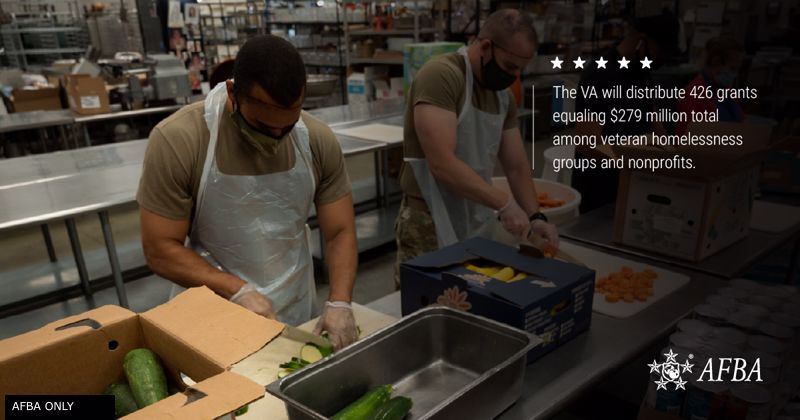
The U.S. Department of Veterans Affairs (VA) recently announced it will award a significant number of grants to community organizations that provide assistance and aid to veterans experiencing homelessness. The VA will distribute 426 grants equaling $279 million total among various groups and nonprofits.
Expansion of the VA's Grant and Per Diem program
This initiative is part of ongoing efforts, including the Grant and Per Diem (GPD) program, to prevent veteran homelessness and help veterans exit homelessness.
According to the VA, the GPD program's mission is "to promote the development and provision of supportive housing and/or supportive services with the goal of helping homeless veterans achieve residential stability, increase their skill levels and/or income, and obtain greater self-determination."
Service centers and supportive housing programs are eligible for GPD funding. Grants are issued to help organizations acquire, build or renovate facilities that will be used for transitional housing. Additionally, per diem subsidies are awarded to help cover the housing and operational costs for centers that provide supportive housing and other services to veterans experiencing homelessness. Grant recipients are typically first in line to receive per diem funding, although other groups can apply.
"The GPD program is one component of VA's multifaceted continuum of services and resources to help veterans exit homelessness," VA Secretary Robert Wilkie said in the announcement. "No veteran should ever have to worry whether they will have stable housing, and these grants put us one step closer to ensuring all veterans are living in a safe and supportive environment."
Grant types designed to support veterans' various needs
Beginning Oct. 1, 2020, the VA will start awarding three types of grants to eligible community organizations. The majority of the newly announced funds — roughly $221 million — will be directed toward "per diem only grants," which will subsidize 12,138 beds and 18 service centers to cover the costs of lodging and care.
An additional $2.4 million will be provided through "special needs grants" aimed at supporting veterans experiencing homelessness who have additional care needs related to chronic mental illnesses, childcare or women's health.
Finally, $55.3 million worth of "transition in place grants" will be awarded to community agencies that help veterans exit homelessness and achieve housing stability and independence. According to the VA, veterans participating in transitional housing programs benefit from support services and housing with the goal of taking ownership of their housing agreements.
Veteran homelessness rates in decline
As of January 2019, the U.S. Department of Housing and Urban Development (HUD) determined that 37,085 veterans were living in unsheltered locations, emergency shelters or transitional housing programs. At that time, states with the largest population of veterans experiencing homelessness were California, Florida and Texas.
However, the number of homeless veterans has dropped by 43.3% since 2011, as a result of interventions like the GPD program. Additionally, as of September 2019, three states (Virginia, Delaware and Connecticut) and 78 communities around the U.S. had eliminated veteran homelessness.
"Our nation's veterans have sacrificed so much for our country and now it's our duty to make certain they have a home to call their own," HUD Secretary Ben Carson noted in a 2019 news release. "We've made great progress in our efforts to end veteran homelessness, but we still have a lot of work to do to ensure our heroes have access to affordable housing."
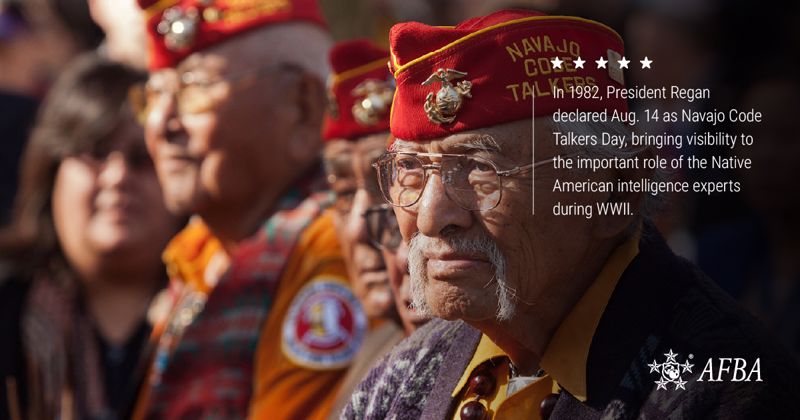
Aug. 14 is National Navajo Code Talkers Day. This observance recalls how approximately 400 members of the Cherokee, Choctaw, Comanche, Hopi and Navajo nations partnered with the CIA and the Marine Corps during WWII to develop a complex military code that helped the Allied Forces win.
 “The appearance of U.S. Department of Defense (DoD) visual information does not imply or constitute DoD endorsement.”
Devising an unbreakable code
Previously, the Choctaw language was used as a code for transmitting messages during WWI, helping launch a victorious attack against German forces. When the Marine Corps sought out another Native American language to use in the Pacific Theater in 1942, the language of the Navajo Nation was nominated and selected.
The military’s code-breaking technologies used at the time could translate three lines of text into English in about half an hour. Once the new system was developed, Navajo Code Talkers could process this same amount of text in just 20 seconds.
While the Navajo Code did use various Navajo words that translated directly into English, the level of complexity went further than that. Code Talkers created a harder-to-crack system based on word association in which different birds were used to describe planes and sea creatures were used to identify ships. For example, lo-tso (whale) was code for battleship while jay-sho (buzzard) was code for bomber plane. Similarly, so-na-kih (two star) signified Major General and toh-ta (between waters) referred to Great Britain.
The Code Talkers also created an encoded alphabet in which English letters could be referenced using up to three possible Navajo words. Wol-la-chee (ant), be-la-sana (apple) and tse-nill (axe) were all code for the letter A.
A total of 411 codewords were added to the Navajo Code Talkers’ Dictionary — and the code remained unbroken through the end of WWII.
Honoring the Code Talkers
The Marines selected a group of 29 Navajo recruits for the pilot program. Once the possibilities became clear, approximately 400 Code Talkers joined the Marines from the Navajo, Cherokee, Comanche, Choctaw and Hopi Nations. They were called the Navajo Code Talkers not because of their identity, but because of their mastery of the Navajo Code.
Code Talkers participated in every Marine operation in the Pacific Theater during WWII. Over phones and radios, they conveyed top-secret tactical information to help facilitate the rapid exchange of information while keeping intelligence safe from enemy ears and eyes. During the Battle of Iwo Jima, a team of six Navajo Code Talker Marines transmitted and translated more than 800 messages, helping secure that critical victory.
The Code Talkers’ efforts weren’t recognized until the operation’s declassification in 1968. In 1982, President Regan declared Aug. 14 as Navajo Code Talkers Day, bringing visibility to the important role of the Native American intelligence experts during WWII. The program’s original 29 participants were granted the Congressional Gold Medal in 2000 by President Clinton, and the four surviving Code Talkers received their medals from President Bush during a ceremony the following year.
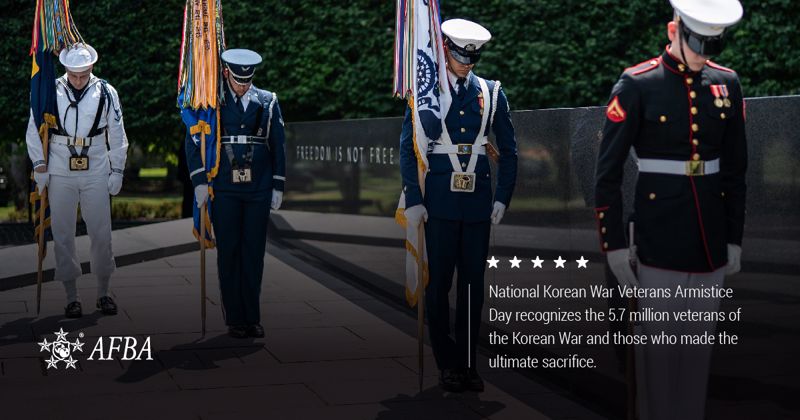
National Korean War Veterans Armistice Day falls on July 27 each year. This observance recognizes the 5.7 million veterans of the Korean War and those who made the ultimate sacrifice.
During the three-year war, which lasted from June 25, 1950, to July 27, 1953, active-duty servicemembers faced unique risks and experiences that set them apart from previous generations. This armistice observance presents the opportunity to remember and honor their service.
Causes and casualties of the Korean War
After being colonized by Japan, the southern part of the Korean peninsula was liberated in the wake of World War II. Backed by the Soviet Union, communist North Korea made an invasion into democratic South Korea in 1950. The U.S. deployed troops to support South Korea during this devastating war of attrition, where both sides fought to wear down the enemy and gain complete control over the territory. After three years, an armistice was signed and the region has remained divided.
The fighting resulted in 36,574 in-theater casualties for the U.S. More than 103,000 service members were wounded in action. As of June 2020, there are still 7,578 individuals whose fate in the Korean War remains unaccounted for.
Health risks for Korean War veterans
According to the U.S. Department of Veterans Affairs, extremely cold climates during the Chosin Reservoir Campaign in the winter of 1950 posed serious risks to those serving and accounted for more than 5,000 U.S. casualties. Temperatures dropped to -50 degrees Fahrenheit with a wind chill of -100 F.
As a result, Korean War veterans are more likely to face health issues including trauma to the nervous system, skin and muscles, vascular conditions, foot-related injuries such as trench foot, frostbite scars and skin cancer.
Active-duty servicemembers may have also been exposed to hazardous substances such as asbestos, polychlorinated biphenyl (PCB) and ionizing radiation during their service in the Korean War. These are known to cause certain illnesses and cancers even decades after the exposure. Those who qualify as atomic veterans may have witnessed the impacts of radiation passed down to their children.
'A different kind of homecoming' in 1953
Given the fact that no peace treaty was ever signed, those who served received a very different treatment upon their return.
"Compared to other wars, theirs was a different kind of homecoming," President Obama observed on the 60th anniversary of the Korean War armistice. "Unlike the Second World War, Korea did not galvanize our country. These veterans did not return to parades. […] Among many Americans, tired of war, there was, it seemed, a desire to forget, to move on."
Each year on July 27, National Korean War Veterans Armistice Day provides a moment for reflection on the service and sacrifices of Americans during this conflict.
The Military Family Advisory Network (MFAN) recently published the results of its 2019 Military Family Support Programming Survey.
First presented during a virtual data release event on June 23, 2020, the responses from nearly 8,000 members of military families were analyzed and divided into four sections:
- Health and well-being.
- Finances, housing and moving.
- Employment and transition
- Modern military family dynamics.
The biennial study's main findings highlight some of the most common challenges and experiences of military families and those transitioning from military service to civilian life.
Active duty spouses and veterans sought flexible employment
Active duty spouses noted that they looked for employers who were understanding and flexible, in general. Specific requests included an appreciation for the demands of military life as well as adaptable schedules, leave policies and remote work options.
Military veterans also desired flexibility, but a few other priorities came first. They primarily sought employers who valued their service in the armed forces and acknowledged their unique skills, and who offered a positive work environment.
While the top reason to leave the service was becoming eligible for military retirement benefits, the next most common reasons to transition out of the military were:
- Issues with leadership or the work climate.
- Family or lifestyle reasons.
- Career limitations.
Couples cited marital stresses
Only small percentages of respondents said their marriages have not been impacted (14.4%) or have grown stronger (13.7%) as a result of a spouse's military service. Negative effects were more commonly cited. Specifically, the following effects on marriage were reported by between 27% and 30% of respondents:
- General stress and strain on the marriage.
- Specific difficulties and challenges.
- Separation and absences.
In addition, 8 in 10 respondents recognized the existence and impacts of intimate partner violence among the military community. More than half (56.7%) reported that it is a common issue.
Parents identified limitations around child care and educational support
As for child care, over three-quarters of military parents said the search has been difficult or very difficult. Many respondents desired a wider variety of child care options, additional care flexibility and more affordable services.
Two in five respondents said they could not think of or access any helpful educational support for their children. Specifically, parents in the military community felt that there was a lack of support for special needs and learning needs in general. Some also agreed that more transition support and curriculum continuity would improve the quality of their children's' education.
Many lacked emergency savings
For the majority of active-duty families, the civilian spouse took on financial responsibilities including managing the day-to-day budget and overseeing larger financial decisions. The roles were largely reversed for veterans and their families.
However, nearly one-quarter said they had no plan whatsoever for addressing a financial emergency. Many respondents cited having less than $500 in an emergency fund or no savings at all, including:
- 22.2% of military retiree families with a pension.
- 27.4% of active duty military families.
- 49.2% of veteran families with no pension.
And yet, most would recommend military life
The top two reasons for not recommending military life included the fact that such a career can negatively impact one's family and add stress and instability to one's life.
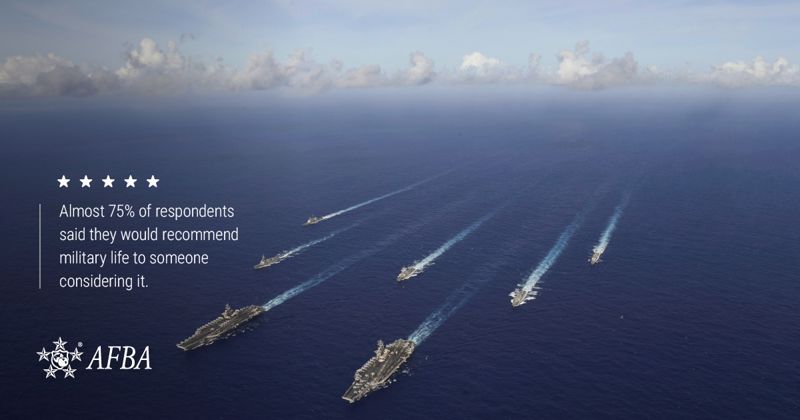
But, in spite of all the aforementioned challenges, roughly three in four (74.5%) respondents said they would recommend military life to someone considering it. The top three reasons included access to a rewarding and secure career in the military, the honor associated with doing one's civic duty and advantageous salaries and benefits.
According to GuideStar, there are more than 45,000 registered nonprofit organizations in the U.S. that are dedicated to serving the veteran community. With so many groups doing good, veterans and their families may not be aware of all the services, support and resources available through these nonprofits.
Here is a small introductory handful of the esteemed nonprofits for veterans:
Children of Fallen Patriots Foundation
As a way to honor the fallen and support future generations, this organization helps provide educational counseling and college scholarships to children whose parents have made the ultimate sacrifice in service to our country.
Esposas Militares Hispanas USA Armed Forces
What started as a Facebook group of military spouses soon became a nonprofit organization committed to serving Hispanic military and veteran families by offering helpful resources and information in Spanish.
Give an Hour
This national network of volunteer mental health professionals provides free services to active-duty military personnel and veterans. Give an Hour also advocates for changing the culture around mental and emotional well-being and treatment.
Hire Heroes USA
To help military members transition into civilian life and employment, Hire Heroes USA offers job search support and career assistance to veterans and their spouses.
Honor Flight Network
This nonprofit's mission to support veterans of World War II, the Korean War and the Vietnam War entails flying these veterans out to visit the memorials erected in remembrance of those who served.
Hope For The Warriors
This service organization supports a variety of programs for veterans and military families. These are designed around wellness, peer engagement, recreation, and transition to civilian life.
Operation Gratitude
Since the early 2000s, Operation Gratitude has delivered more than 2.6 million care packages to members of the military, veteran and first responder communities.
Operation Homefront
This nonprofit for veterans helps families secure rent-free transitional housing, financial assistance for homebuying and caregiver support services.
Operation Second Chance
This organization serves ill, injured and wounded combat veterans. Volunteers identify immediate needs and offer support through hospital visits, counseling resources, scholarships, retreats and more.
Operation Troop Appreciation
Active-duty and veteran members of the armed forces have their wish lists fulfilled by morale-boosting gifts from Operation Troop Appreciation. The organization also supports transitional housing and distributes letters of gratitude.
Reel American Heroes Foundation
Partnering with military hospitals and bases, this cleverly named nonprofit provides wounded veterans and service members with recreation therapy through fishing trips and duck hunts.
United Service Organizations
Perhaps one of the most well-known nonprofits for veterans and active-duty servicemembers, the USO supports a broad range of programs and resources, from transitional assistance to entertainment and community building.
Veteran Tickets Foundation
Vet Tix distributes free event tickets to veterans and their loved ones, promoting stress-free opportunities for family bonding, memory-making and community engagement.
Vietnam Veterans of America
The VVA advocates for veterans' issues including health care access, public opinion and perception, POW and MIA accountability, and more, specifically focusing on supporting veterans of the Vietnam War.
Wounded Warrior Project
This nonprofit for veterans serves those who have experienced a physical injury or mental illness as a result of their post-9/11 military service. The organization sponsors a wide range of programs focused on recovery and empowerment.
The oldest and most senior branch of the United States military in order of precedence, the U.S. Army actually predates the U.S. itself. Congress established the First Continental Army on June 14, 1775, more than a full year before the signing of the Declaration of Independence, to recruit professionally trained soldiers that could combat the British “Redcoats” in the Revolutionary War.
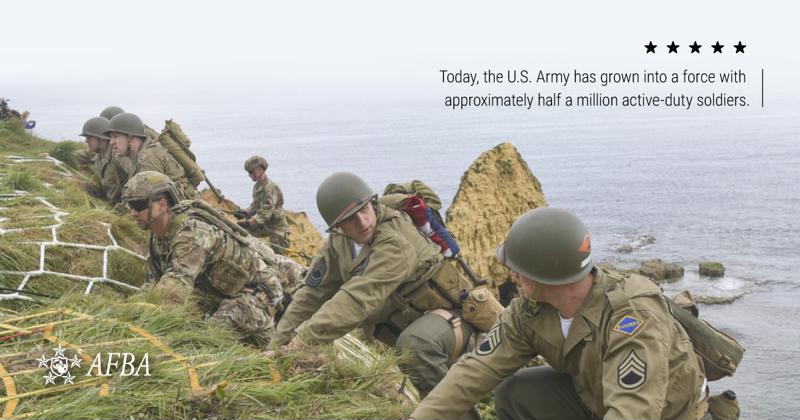
In the centuries since then, America’s Army has grown into a fighting force with approximately half a million active duty soldiers. And on Sunday, June 14, 2020, the U.S. Army will observe its 245th birthday, affording military servicemembers and civilians alike an opportunity to celebrate the branch’s rich history and continued role as a force for good in the world.
How to celebrate the U.S. Army’s birthday in 2020
Celebrations of the U.S. Army’s birthday will look much different this year due to the current pandemic. The Army’s birthday is not an official state or federal holiday, meaning government offices and private places of business remain open on June 14th, while Army and Department of Defense agencies typically choose to celebrate the occasion at the base or local level with special events, ceremonies, and social occasions. Additionally, a wreath will be laid at the Tomb of the Unknown Soldier in Arlington, Virginia, in celebration.
The USO, AMVETS, The American Legion, VFW, and other military service organizations also usually observe the holiday on a local or agency-wide level each year. If you would like to know if and how the birthday is being celebrated in your community, you can reach out to the local chapter of your preferred Veterans Service Organization.
One unique annual celebration is the Army Birthday Ball, which is usually held at military bases, community centers, civilian hotels, and other applicable sites around the world. This black-tie formal event features military members in full-service dress, also known as “Dress Blues” or “Mess Dress,” and includes a long list of traditions that are intended to pay respect to those who sacrificed life and limb to serve and to welcome the newest members of the service and salute the future of the Army at large.
 “The appearance of U.S. Department of Defense (DoD) visual information does not imply or constitute DoD endorsement.”
In that spirit, one of the most popular traditions at the ball is the cutting of the Army birthday cake, in which the oldest serving soldier and the youngest serving soldier use a ceremonial saber to cut the first slice. Another common tradition is the receiving line, in which Army leaders personally greet each attendee entering the ballroom, and the giving of toasts to the United States, military families and to fallen comrades, the latter toast one that is always respectfully answered in silence.
This year, the 245th U.S. Army Birthday Ball was due to be held in Washington D.C. Saturday, June 13. Due to coronavirus, however, the event has been canceled.
Additionally, private citizens can always organize events in their own community or find ways to celebrate with friends and family. The 245th anniversary of the U.S. Army provides a wonderful opportunity to both reflect on the centuries of sacrifice that have come before, and celebrate the bright future that lies ahead for America’s fighting force.
Amid the COVID-19 outbreak, veterans may have questions about how to stay safe while accessing important health benefits and services. Read on for answers and resources related to accessing VA health care resources, along with guidance from the Centers for Disease Control and Prevention for how veterans can protect themselves during this time.
Take extra health and safety precautions
To protect yourself from the fast-spreading coronavirus, be sure to follow all state and federal guidelines. The CDC advises staying home, limiting contact with other people and adopting social distancing measures such as keeping a 6-foot distance between yourself and others. You should wash your hands frequently and can wear a protective face covering when out in public. Now is also a good time to thoroughly clean and disinfect your home, focusing on high-touch areas.

Request that prescription refills be mailed to you
Having medication mailed to you will limit the amount of exposure you would otherwise experience by visiting a pharmacy in person.
According to the Department of Veterans Affairs, if you currently receive your VA prescription refills by mail, your deliveries will continue. Otherwise, you may request that a refill is sent to you by mail. To do so, you will first need to confirm that the mailing address in your VA.gov profile is accurate.
Next, you can request your refill using either the RX Refill app from a mobile device, the MyHealtheVet prescription tracker online or the VA pharmacy phone number printed on your prescription label. You may also complete and mail the prescription refill form included with your prescription to request a refill.
The VA has updated refill policies so that in-person refill evaluations can be conducted through telehealth appointments. If you run out of medication or need assistance refilling your prescription, you can use the secure messaging service to connect with your provider or call your local VA facility.
Choose telehealth services for non-emergency VA health appointments
Health care facilities around the nation may have limited in-person availability to non-COVID-19 patients. Consider using telehealth services to attend to your routine health needs. Virtual appointments mean you won't need to visit a hospital or health care center for non-emergency health matters.
If you have a routine appointment or a doctor's visit scheduled for a non-urgent health matter, you have a few options. The Department of Veterans Affairs advises either canceling or rescheduling non-urgent appointments, including elective procedures, to a date farther in the future. Alternatively, you can keep your appointment but conduct it in a telehealth format over the phone or a video meeting portal, such as VA Video Connect.
To contact your provider and book a telehealth appointment, the VA recommends using the My HealtheVet secure messaging portal or the VA appointment scheduling tool. If your care facility participates, you may be able to use the VA Health Chat app as well. Keep in mind that only some health services can be conducted over a phone or video appointment. Check your local VA health facility's website for the latest information and to learn more about your options.
If you have a standing appointment or service scheduled with a community (non-VA) health care provider, contact them directly to see if you can reschedule or conduct the appointment virtually. Referrals to community care facilities are still being issued, with an emphasis on referrals for those in urgent need. The VA has noted that referral eligibility requirements remain unchanged.
Prioritize your mental, physical and emotional well-being
Take the time to prioritize all aspects of your personal wellbeing. Unless you are sick, the CDC suggests taking a walk in a local park and exercising at home. Virtually check in on loved ones and work on staying connected, even if from a distance.
Reach out for help if you need it, by contacting a trusted friend or family member or through the Substance Abuse and Mental Health Services Administration's Disaster Distress Helpline, at 1-800-985-5990 or via SMS by texting "TalkWithUs" to 66746.