
Is life insurance the most overlooked, misunderstood and underrated kind of insurance? It may just be, specifically because it's so hard to envision needing this kind of coverage. It's uncomfortable to consider needing life insurance, and if you're young and in great health, it can seem like such a remote prospect, you might simply ignore it.
But that kind of attitude, while understandable, leaves people without the coverage they need. Only 53% of men in the U.S. have life coverage, and even fewer women — just 46%. This is why the insurance sector has come together to declare September Life Insurance Awareness Month. It's the time of year to take some of the fear and mystery out of life insurance and see it for what it is: An important and affordable way to look out for your loved ones.
What Is Life Insurance and Why Do You Need It?
Simply put, a life insurance policy exists to ensure that if the holder passes away, their nearest and dearest will receive financial support. It's a way to help families get by in extremely hard circumstances — and considering just how vital this can be, the costs are low.
In some cases, it's clear why and how that money matters. If you're married, it will help your spouse. If you have children, it can go to their care. But what if you're single and childless? Life insurance still matters, and it was cases like this that Life Insurance Awareness Month was founded to address.
There are so many instances when extra funds could help the people and things you care about most. If you own your own company or have anyone financially dependent on you in any way, money may matter a great deal. You provide for the individuals in your life and look after them every day. It can be comforting to know you could do the same in your absence.
Costs simply add up. Family members will have to go grocery shopping every week. Any kind of business will need money to keep the doors open and the lights on. Life insurance helps these things keep going — it's a way to show you're watching out for all the pieces of your life, and it's typically not hard or overly expensive to get a policy.
How Do You Get Life Insurance — and Pick the Best Plan?
How much coverage do you need to provide for your loved ones? That depends, but you can narrow it down. For example, Life Happens, the same group responsible for Life Insurance Awareness Month, offers a calculator. Plug your information into this system and you'll figure out the best policy amount for your needs. Then it's time to choose a provider.
Finding a life insurance policy doesn't have to be complicated, but you should take the decision seriously. This might mean working with an insurance agent or broker. That could mean choosing an independent professional to compare companies' offerings or working directly with a provider's agent.
Every provider offers a slightly different selection of products, along with a unique experience for policyholders, and a broker could help you sort through the offerings. Policies may also be available through employers, but there are some complexities that come with certain professions.
This is a good time for a history lesson. In 1947, U.S. service members weren't able to find coverage that would pay a death benefit if they lost their lives in combat. This is the reason why AFBA was founded — to provide peace of mind to the people who were serving their country. That's what we're still doing today, offering benefits to active duty military members, veterans and first responders.
Cybersecurity is nothing to take lightly. The U.S. government was part of a global cybersecurity breach led by Russian-speaking hackers that stole employee data and much more in June of 2023. When a cybercriminal steals data information, they could become privy to someone's most sensitive details from their location and phone number to their Social Security number and passwords.
The Department of Defense and other government agencies process highly sensitive government records that if leaked, could jeopardize national security. This is why the Department of Defense and Homeland Security are working together to develop stronger methods of protection.
Here's an overview of the latest information.
Lifting the responsibility
In March of 2023, the Biden-Harris administration made an announcement that cybersecurity will be a primary focus to protect the interests of the American people and their government.
The first half of this promise aims to lift the responsibility of cybersecurity off of the shoulders of individuals, small businesses and local governments. These expectations are instead placed onto the plates of larger entities that have the means and dexterity to provide such a service.
The administration will leverage the use of public and private collaboration to defend mission-critical information, while increasing regulations on essential industries such as banking and healthcare.
A proactive approach
There is a large gap between a reactive approach to cybersecurity and a proactive approach. Reactive is where a business has some security in place, but is otherwise reacting to every threat that occurs as it's happening in the moment. A proactive approach, however, requires that an entity does everything in its power to prepare its infrastructure long before a threat ever happens — and then develop new methods of security when a breach does occur.
In the White House's address, the administration mentions realigning their focus on a long-term approach to cybersecurity for a more resilient future. This would help ensure that when a breach happens, the effects are minimal and hold no long-lasting damages.
Cybersecurity resilience means reducing technical vulnerabilities and ensuring that all mission-critical information is backed up and separated from the primary modules.
The address says it's focused primarily on ransomware. This occurs when a hacker is able to get into your system and hold some of your data "hostage" through walls of bugs and blockers until you're able to pay their ransom. NetApp notes that ransoms can range from $10,000 to millions, with the highest ever recorded being $70 million. Any business would be devastated by just one attack such as this — especially if the data being held is critical to their business.
The solution is ensuring that all data — especially that which your business is built on — is backed up in several separated spaces as often as possible.
A robust cyber workforce
All of this work is not possible without a capable team of trusted developers and information technology professionals. The U.S. plans to work together with its international allies to develop counter-threats and joint preparedness. Oftentimes, the cost of implementing such a robust system can get high, but together, these expenses are mitigated as much as possible.
In peacetime and in crisis, the government is working hard to protect and reinforce the nation's critical information.
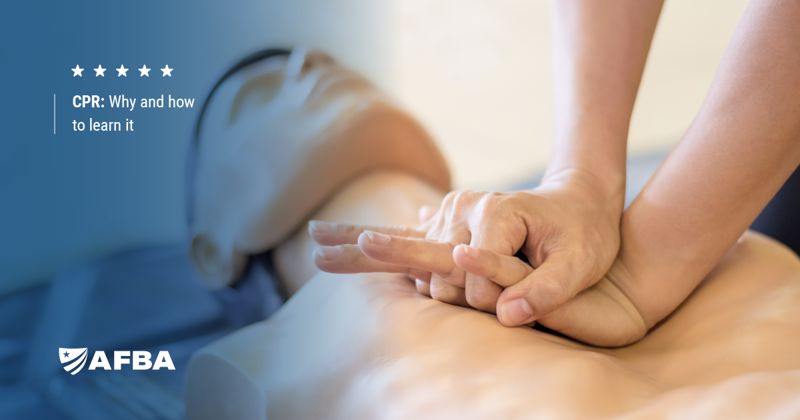
Cardiopulmonary resuscitation (CPR) is a life-saving medical technique consisting of chest compressions and, at times, rescue breaths. It refers to a series of tasks meant to restore blood circulation and oxygenation during instances of cardiac arrest, such as those associated with a heart attack or near-drowning.
If you’re not trained in CPR, you might want to seek out a class. Here, we’ll describe what CPR is, provide a resource describing the steps, and explain how you can find a CPR course near you.
 “The appearance of the U.S. Department of Defense (DoD) visual information does not imply or constitute DoD endorsement.”
Who can perform CPR?
Anyone with sufficient physical strength can perform CPR, as it requires no tools. It does, however, require training, especially if you want to learn rescue breaths.
When cardiac arrest occurs, blood flow throughout the body stops, preventing oxygenation. Without rapid intervention, this can cause brain damage in minutes. When CPR is done successfully, it restores blood flow to the body long enough for emergency medical services to arrive and restore a normal heart rhythm.
This procedure can be performed for adults, children and infants, though it should not be done for newborns less than four weeks old.
How do you perform CPR?
The American Heart Association (AHA) provides a popular set of guidelines on how to perform CPR. The list of steps involved is likely lengthier than you realize.
After assessing the situation, you or someone nearby needs to call 911. If you’re untrained, you will be given instructions. The procedure primarily involves doing hard and fast chest compressions at 100-120 per minute. An automated external defibrillator (AED) can come in handy in these situations and requires no training as the mechanism comes with instructions.
The key words when attempting chest compressions are “hard and fast.” You might have seen CPR done on TV or in movies, where they lightly press on the chest repeatedly. They do this because using the proper amount of force required in real-life CPR could cause injury.
Persistence is often a factor, as you could be making chest compressions for a lengthy amount of time before blood flow is restored. That’s why you’ll need some physical strength and endurance.
Where can you learn CPR?
One of the top resources for finding classes that teach CPR is the AHA tool or find a class near you on the American Red Cross website. All you have to do is to enter your location. After you provide one, you’ll be presented with a list of nearby places holding official classes.
You can use the provided filters to sort results based on what type of class you’re looking for. For example, you could choose to see only Basic Life Support (BLS), Advanced Cardiovascular Life Support (ACLS), Pediatric Advanced Life Support (PALS) or other classes with specific focuses.
You can also sort by the times classes take place: morning, afternoon, evening and nighttime. Other filters include spoken languages and class format, which is either a classroom setting or a “blended learning” mix of online and in-person instruction.
Most people should start with BLS before attempting more advanced courses. Look over every option and choose a class that fits your skill level and needs.
CPR can save lives, and is worth learning
Few people know proper CPR techniques. But it’s a skill you should have for a simple reason: If there’s a medical emergency and you’re the only person capable of performing the technique correctly, it can make the difference between life and death. At such times, you might be the one person present who can save their life.