
First responders are integral to disaster relief, and few catastrophes are as damaging and life-threatening as hurricanes. These natural disasters can wreak havoc anywhere they go, stranding families and causing mass destruction.
The effects from Hurricanes Ian and Fiona required a great deal of help getting the affected areas back on track and functioning again. Thankfully, many first responders answered the call of duty from across the U.S., applying their expertise and passion to help with many relief efforts.
“You’re looking at 12-hour days”: The IAFF first responder Disaster Relief team helps with Hurricane Ian
Touching down in Florida on September 28, 2022, the destruction from Hurricane Ian cost nearly $60 million to repair and left over 100 people killed. Ian is the second-deadliest hurricane of this century, behind only Katrina in 2005. Ian was classified as a Category 3 storm when it first landed in Cuba, growing to a Category 4 by the time it hit Fort Myers, Florida.
The International Association of Firefighters (IAFF), led by John Gardell, had left to assist with efforts in Florida less than a day before Ian’s landfall. Because the IAFF’s days often started at 7 a.m., Gardell says, they were often working for 12 hours with very little rest, tarping roofs and removing damaged items, among other tasks.
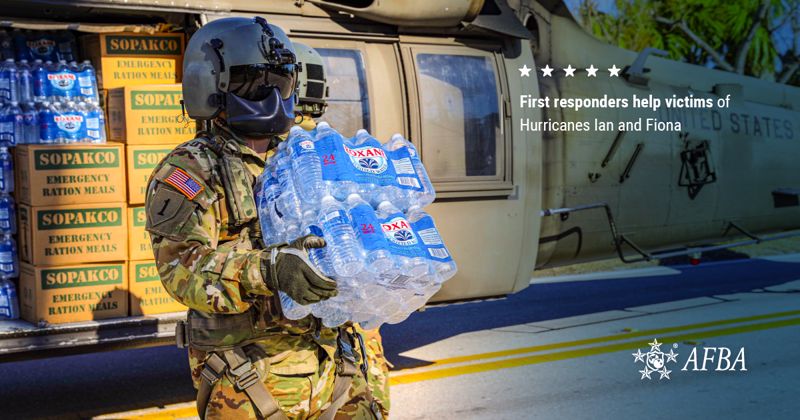 The appearance of the U.S. Department of Defense (DoD) visual information does not imply or constitute DoD endorsement.
Pennsylvania Task Force 1
The IAFF is one of many first responder teams that helped with Hurricane Ian. In South Carolina were 45 members of Pennsylvania Task Force 1, which included first responders from the Philadelphia Fire Department and others from various parts of PA. This team was practiced in urban search-and-rescue, and they applied their training to relief efforts.
Maryland Task Force 1 and N.Y. state troops help with Hurricane Fiona
Hurricane Fiona, which primarily impacted Puerto Rico, Turks and Caicos, and the Dominican Republic, was a Category 1 hurricane that hit Puerto Rico on September 18, 2022, causing blackouts and leaving many people without running water. Over 1,000 residents required rescuing and four people were killed.
Maryland Task Force 1 was one of the teams who lent their aid to victims of Hurricane Fiona. A FEMA task force, the team consists of 35 firefighters and citizens from across the state. This group was initially the only federal team sent to assist with relief efforts.
The New York Police Department also sent 100 state troops and drones to contribute after Puerto Rico Governor Pedro Pierluisi requested assistance from those who could speak Spanish to help with rescue operations. The drones were intended to conduct surveillance of the damage.
Veterans Affairs
Veterans Affairs had several issues dealing with Hurricanes Fiona and Ian. The VA’s regional team had just finished its efforts with Hurricane Fiona, but when Hurricane Ian hit, they were forced to evacuate their inpatients from the Bay Pines Medical Center. This decision came after speaking with the National Weather Service and local and regional leaders. 152 people were relocated to safety, which included those in acute, hospice, domiciliary, and long-term care.
First responders’ persistent efforts with Hurricanes Ian and Fiona
First responders across the U.S. were sent to help with Hurricanes Ian and Fiona after they had caused severe destruction across Florida, South Carolina and Puerto Rico, among other places. Armed with trained firefighters, medics, and citizens with various talents, first responder airmen and women are always hunting the storms that threaten the U.S., and their efforts are crucial for rescuing citizens and helping rebuild after the damage of a hurricane.
The holiday season is a time for celebration, togetherness and joy. Regardless of how you choose to observe this time, there’s something for practically everyone to enjoy. Even if you don’t celebrate any particular holiday during winter, the cooler temperatures and snow can be delightful.
However, with winter comes new threats to fire safety. From Christmas trees to Hanukkah candles, electricity and flame are common features of this time. That means new precautions for your home that need to be followed for events that are free from danger.
Winter statistics you should be aware of
From 2015-2019, fire departments across the country were busy responding to an average of 160 home fires that originated from Christmas trees, leading to a mean of two deaths, 12 injuries and $10 million in property damage, according to the National Fire Protection Association (NFPA).
Holiday decorations, cooking accidents and candle fires were also large contributors to fires. In many instances, Christmas decorations that were too close to a heat source were the primary causes, causing an average of one death, 26 injuries and $13 million in damages.
Fires could be the result of cooking appliances that were in close proximity to other sources of heat or candles that were left unattended. Christmas Day alone has a 2.5 times heightened risk of accidents because of candles that caused nearby flammable materials to catch fire, according to the NFPA report.
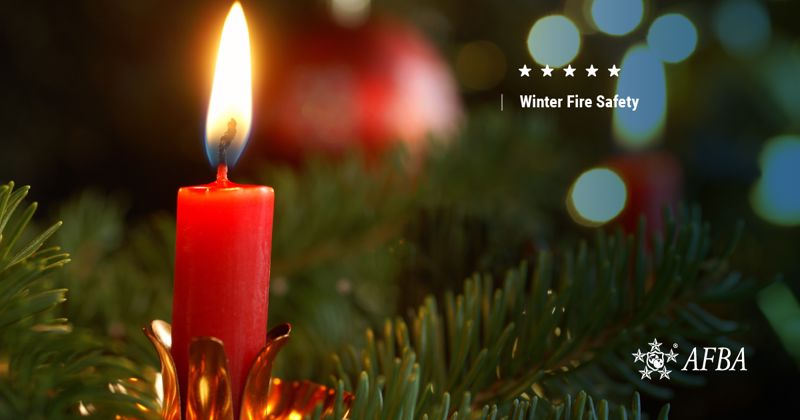 The appearance of the U.S. Department of Defense (DoD) visual information does not imply or constitute DoD endorsement.
Ideas for staying safe during winter
By following proper safety cautions, you can help prevent property damage and possible loss of life from happening in your home. Here are some ideas for how to stay safe during the wintertime:
- Don’t leave candles unattended. Always extinguish candles before you leave the room. Don’t fall asleep with lit candles nearby and keep them at least one foot away from anything that can catch fire. Bedrooms are full of flammable materials, so it’s best not to use candles in these places, according to the Texas Department of Insurance (TDI).
- Keep your Christmas tree away from heat. Place Christmas trees far from fireplaces, space heaters or any other potential fire hazard.
- Avoid running cables under furniture. Cables can cause nearby objects to catch fire if placed close to flammable material, so don’t put them under furniture or rugs.
- Replace your extension cords. Old extension cords can wear out and become dangerous. If your cables have any frayed areas or are insufficient sources of power, buy new ones.
- Make sure nearby fire hydrants are easily accessible. If there are any obstacles between your home and a fire hydrant, it can delay a fire department’s ability to respond. In addition, don’t allow ice to accumulate on it.
- Keep your smoke detectors in good working order. This means ensuring that their batteries are sufficiently charged, and the device is still working. Many smoke detectors have testing features, so take advantage of them.
- Don’t use indoor decorations outdoors and vice-versa. Don’t use power sources meant for inside the house outside, either. Remember to use clips instead of nails to hang decorations — nails can damage cords and lighting, increasing the risk of fire.
- Always plug space heaters directly into wall outlets. Follow the included safety instructions if you use any alternative heating sources such as space heaters. Don’t plug them into extension cords or power strips.
Have a safe holiday and winter season
Many causes of fire are easily preventable if you know how. Avoid accidents with these tips and avoid the common origins of flame. With a little knowledge of what starts fires and how to avoid them, you can help your home and the people in it stay safe, happy and healthy as they enjoy the festivities.
National First Responders Day is here on Oct. 28, and it’s a time to honor the efforts of first responders everywhere who work selflessly to keep Americans safe. How can you do that? One of the best things you can do for a first responder is to appreciate the trauma and harsh reality these individuals experience daily.
Helping Our Heroes With Post-Traumatic Stress Disorder and Alcohol Addiction
Being a first responder is one of the most difficult jobs anyone can do. Paramedics, police officers, and firefighters have a sworn duty to protect others in the harshest of conditions. They are the first at the scene to witness scenes of violence, suffering and death while also having to think clearly and remain calm.
This takes a toll on many of them. The proof of this is in the data: According to the Help For Our Heroes Program, 14.6% of paramedics face PTSD at least once in their lifetime, with firefighters having a 7.3% rate and police experiencing a 4.7% rate. Rates of alcohol and drug abuse are also far higher than in the general population. According to a study cited by the Nova Recovery Center, nearly a third of firefighters suffered from alcohol addiction.
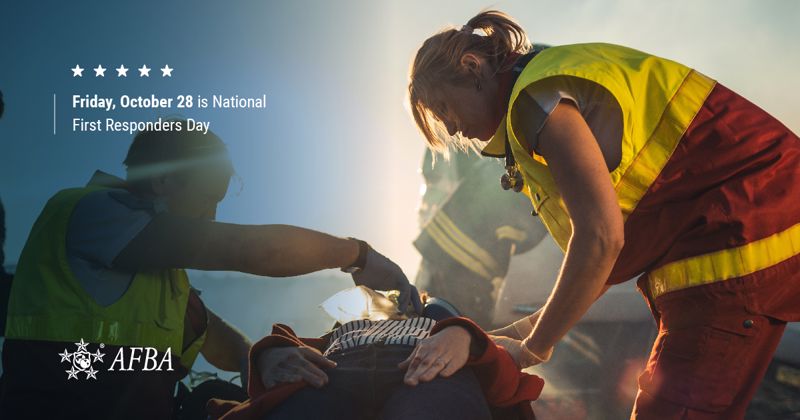 The appearance of the U.S. Department of Defense (DoD) visual information does not imply or constitute DoD endorsement.
Don’t Suffer in Silence: Newport News, Virginia, Holds an Awareness Event for First Responders
With mental health disorders on the rise in the first responder population, there must be hope for these protectors of the people. The first responders of Newport News, Virginia with the local Critical Incident Stress Management Team are trying to help them.
A public meeting was held at the First Baptist Church with the objective of aiding first responders in dealing with the trauma and stress of their professions.
Darius Davis, a Newport News police officer and crisis negotiator, was a speaker at the event. “Suicide affects military, police and first responders 80% more than any other population,” he claims.
Joining him was city fire department Battalion Chief David Lewis. The two have something in common: Both admit to having considered suicide as a solution to their seemingly impossible levels of stress.
Lewis recalls a memory of when he was pulling into a parking lot near his fire station. While trying to cope with the stresses of his job, which included responding to calls involving shootings, stabbings, murder, and suicides, he had lost a child just six hours before. He says he felt he had “no solution” for any of the problems he was dealing with, so he “basically shut down.” Lewis kept his thoughts to himself for nearly two years before finally seeking help. Now, he works to prevent others from suffering as he did, encouraging them to reach out instead of suffering in silence.
Suicide Prevention Month ended in September, a time in which discussions around suicidal thoughts, the stigma of mental health, and the effects they have on preventing many from seeking help are encouraged. Mental health affects people from all walks of life, but in the first responder community, it’s especially problematic as many in the field don’t see any means of relief.
Helping Others First Comes at a Cost, But We’re Making Progress
National First Responders day is a time meant to show appreciation for first responders in everything they do. This includes acknowledging the realities of the job and the toll they take on these paragons of courage. There’s a lot of work to be done, but we’re slowly but surely making it just a bit easier for first responders to continue to selflessly serve us by paying attention to the realities of their experiences.
A firefighter is one of the most honorable and difficult positions one can imagine. They’re first responders who are expected to arrive at the scene of any emergency call before anyone else. Having undergone EMT training and being responsible for running headfirst into the thick of danger, it might seem like firefighters know exactly what to do in any situation.
However, firefighters have superior officers, too, and those officers were once firefighters themselves. Being a firefighter is a genuine career that can occupy one’s entire life. There are many ranks of firefighters, from the probationary firefighter all the way up to the fire chief.
Here’s what the career path of a firefighter often looks like:
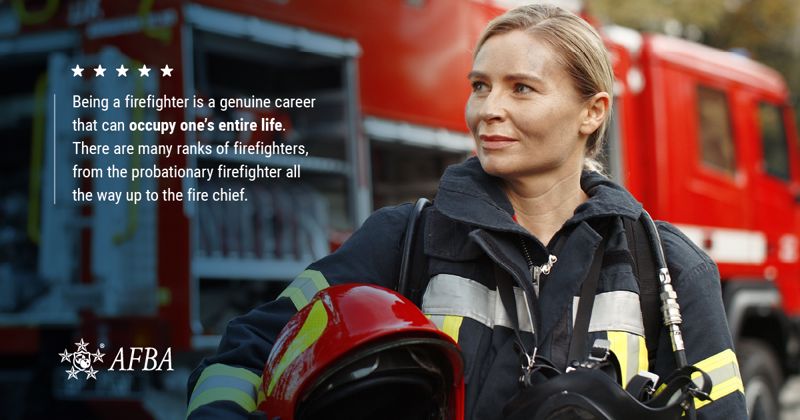 The appearance of the U.S. Department of Defense (DoD) visual information does not imply or constitute DoD endorsement.
Probationary firefighter
As soon as someone meets the requirements in the recruit academy, they can start their journey as a probationary firefighter. This period lasts anywhere between 12 and 18 months and requires exemplary commitment and effort.
A probationary firefighter’s job isn’t easy, nor is it supposed to be. Their working hours will be long, and their sleeping periods will be strict. Above all, they’re expected to prove that they’d make a good firefighter, which means that they can get along with others.
Firefighter
If a prospective firefighter can make it through their probationary period, they become an official firefighter. Firefighters have four main jobs, including:
- Extinguishing fires.
- Investigating the causes of fires.
- Aiding anyone who might be injured.
- Helping prevent fires.
A firefighter is also responsible for rescuing people who are in danger, including during incidents not related to fire, such as natural disasters and auto accidents. Because virtually all firefighters have EMT training, they’re prepared to protect those in danger and administer first aid to anyone in need.
Driver engineer
These are the individuals who drive the fire truck and are duty-bound to get people in and out of a call safely.
Driver engineers need to have mastered the ins and outs of fire apparatus systems, fire trucks, equipment, and water supplies to do their job effectively because they’re responsible for all of these things.
Lieutenant
The firefighter lieutenant is capable of all the tasks of a driver engineer, plus ensuring the function of the fire department. They’re responsible for inspecting buildings to make sure they don’t have any fire hazards and conducting training exercises to prepare for special emergencies such as earthquakes and chemical spills.
Captain
A firefighter captain is responsible for managing their station. When at the scene of a fire, the captain assesses the situation and plans a course of action for firefighters to follow.
Depending on the size of the station, a firefighter captain may have staff working under them or, as the most senior officer at the station, be responsible for the operations of the entire unit.
Battalion chief
The battalion chief is the first rank of all the chief officers. Similar to other ranks, they’re responsible for fire safety compliance, equipment operation, staff evaluations, and making sure the station is in top shape. They have the additional task of being responsible for all officers under them, from the captain on down.
Assistant chief
Assistant chiefs are the second in command, taking over when the fire chief is out. They assist the fire chief in all tasks, including strategic and operational planning for fire stations. Having mastered the previous ranks, they’re extremely capable individuals.
Fire chief
Fire chiefs are the head honchos of the fire department. These individuals are responsible for strategizing and collaborating with local government officials to ensure the fire department is prepared for anything and to prevent disasters from happening in the first place.
In many ways, Electric Vehicles (EVs) are vastly superior to traditional gasoline-powered vehicles. While it’s true that they’re environmentally friendly and arguably vital to stopping the damage to nature caused by carbon emissions, it’s also a fact that EVs are very, very fast and comparatively much easier to maintain. This makes them superb vehicles for first responders.
With the planned switch to EVs comes some challenges, however, as these vehicles are wildly different from their predecessors in ways that first responders need to anticipate. A few companies are preparing for exactly that.
 The appearance of the U.S. Department of Defense (DoD) visual information does not imply or constitute DoD endorsement.
EVs are being introduced to the New York Police Department
What does a 480-horsepower all-electric police interceptor look like? It looks exactly like the Ford Mustang Mach-E GT, the police interceptor version of which was presented in Apr. 2022 at the Javits Center for the New York International Auto Show.
With the advent of EVs and their colossal growth that’s set to overtake sales of gasoline-powered vehicles as soon as 2025 by some estimates, the NYPD stepped up and purchased its first Tesla Model 3 EV to be used as a patrol vehicle in 2021. By the middle of Apr. 2022, New York City approved the purchase of 250 more. Now, intending to be carbon-neutral by 2050, NYC has begun an initiative to make its entire vehicle lineup completely electric by 2035 starting this year with the Mach-E GT.
Out of a variety of potential EV police interceptors, the Mach-E GT scored the highest for sheer acceleration — able to hit 60 mph from zero in 3.5 seconds — and braking. The Mach-E GT is capable of traveling 270 miles on a full charge with its 88 kWh battery pack.
GM is introducing an EV First Responder Training program
As part of GM’s new EV lineup, which includes the Cadillac Lyriq, GMC Hummer EV, and Chevrolet Bolt, the company is advancing a training program for first responders to introduce them to the unique challenges that EVs hold in situations involving them.
For example, unlike traditional gasoline-powered vehicles, EVs place much of the weight in the vehicle at the bottom. This is where the battery pack is typically located, often weighing thousands of pounds. It’s not just the redistributed weight that can make rescuing the people inside a challenge, it’s also the sheer amount of energy that’s stored in the battery pack.
The courses combine live presentations, virtual demonstrations, videos, and discussions from experts. GM encourages both first responders and owners of EVs to take advantage of its program.
GM isn’t the only company involved in training first responders
In addition to GM’s efforts, Tesla maintains a dedicated website intended for first responders. Its purpose is for “helping the fire departments and first responders safely handle emergency situations involving all Tesla products.” Included are “emergency response guides” and “quick response sheets,” individually produced for many of their vehicles.
The National Fire Protection Association (NFPA) maintains its own Emergency Response Guides compiled from over 60 manufacturers for first responders to use as reference. From newer companies such as Lucid to established brands such as Ford and Jeep, all of its guides are free to download and readily available.
The advantages of EVs make them excellent vehicles for first responders both from a performance and maintenance standpoint. Nonetheless, while these benefits are numerous, there are still some challenges to overcome before they can become mainstream for first responder units. These groups need to be aware of the hazards and mechanical differences inherent to these cars and trucks to avoid unnecessary injury. Companies such as GM and Tesla as well as the NFPA are attempting to make the switch as seamless as possible so first responders can take advantage of these new vehicles.