
According to the Department of Defense, there were 1.3 million members of the armed forces as of March 2020. A recent study dives deeper into who these people are, where they come from and how popular beliefs about their origins and reasons for enlisting may be further off than many might think.
 “The appearance of U.S. Department of Defense (DoD) visual information does not imply or constitute DoD endorsement.”
Widely held misconceptions
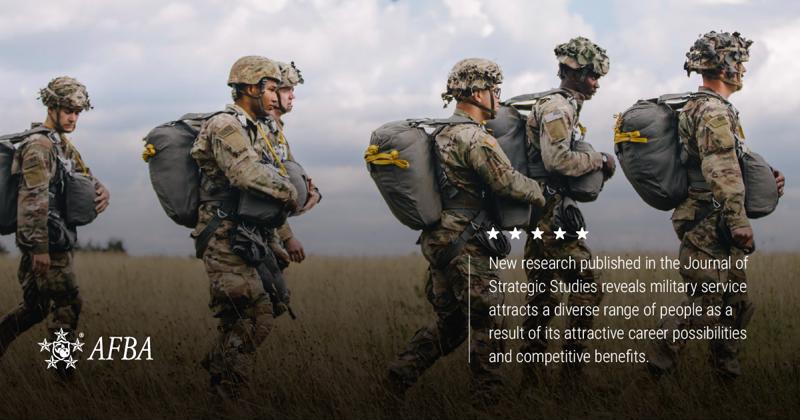
Since service in the armed forces became voluntary in 1973, after the draft was abolished, many Americans believed it would attract primarily disadvantaged groups and young people with limited prospects. However, new research published in the Journal of Strategic Studies reveals that this stereotype does not reflect reality. The study shows that military service attracts a diverse range of people as a result of its attractive career possibilities and competitive benefits.
The study, titled “A mercenary army of the poor? Technological change and the demographic composition of the post-9/11 U.S. military,” debunks the myths that often permeate academic and mass media publications. It explains that many assume that the majority of enlisted personnel come from poor rural communities or economically disadvantaged urban environments, who see the armed forces as an “escape” or “sanctuary.”
As the researchers pointed out, this is not only a problematic stereotype, but it also implies that the demographic makeup of those out on the front lines is disproportionate to the U.S. population as a whole — hence the “rich man’s war, poor man’s fight” perspective.
Class-based conclusions
The researchers tested two assumptions. The first — the opportunity cost theory — “implies that individuals from more disadvantaged socio-economic backgrounds, lacking the skills to compete in the job market, have more to gain and less to lose from joining the military.”
However, according to their findings, the majority of recruits have in fact come from the middle class, with above-average levels of affluence. Contrary to popular belief, the poorest (and wealthiest) communities are underrepresented in the armed forces.
The study concludes that “men and women who serve are likely to embody the values and culture of the median voters. This affects not only the nature of the military itself, but also the calculations in terms of costs and benefits of democracies electing to go to war.”
Skill-related findings
The second assumption — the de-skilling hypothesis — suggests “that increasing reliance on advanced technology has relieved the military from employing highly skilled personnel, thus allowing for the recruitment of less talented individuals.”
On this point, the researchers found most recruits exhibited average cognitive skill levels. However, lower-income individuals with higher intelligence levels — and, by extension, better career prospects — were more likely to enlist.
The researchers conclude that the increased use of technology in the military has actually increased, rather than decreased, the need for highly skilled recruits. They argue that the continued sophistication and complexity of military tactics, tools, threats, and technologies have in fact raised the bar for the recruitment process.
These new understandings help “explain why the U.S. military has displayed high levels of military effectiveness in recent conflicts, an outcome that advanced technology alone cannot account for.”
That the U.S. military is not a last-resort employment destination but rather a selective employer offering attractive career opportunities suggests that each branch will need to maintain a competitive position in the job market. The researchers forecast additional spending, higher compensation and other incentives.

Flyover salutes by the Navy's Blue Angels and Air Force's Thunderbirds are paying tribute to the essential workers, health care professionals and first responders serving in cities across the country in response to the COVID-19 pandemic. The two elite flight demonstration squadrons have flown individually and jointly over major and mid-sized cities hit hardest by the coronavirus outbreak.

Operation America Strong
President Trump announced the flyover plans during an April 22 press briefing, explaining, "We're paying tribute to our frontline health care workers confronting COVID. And it's really a signal to all Americans to remain vigilant during the outbreak."
Called Operation America Strong, the initiative is intended to salute those fighting on the front lines of the national emergency, while demonstrating a sense of national solidarity with those emergency workers.
"This is a tribute to them, to our warriors. Because they are equal warriors to those incredible pilots and all of the fighters that we have for the more traditional fights that we win," the President said. "Operation America Strong was the idea of our great military men and women — the Thunderbirds and the Blue Angels crews who wanted to show support to the American medical workers who, just like military members in a time of war, are fiercely running toward the fight."
Army and Navy unite for a collaborative salute
The Thunderbirds and Blue Angels first appeared together on April 28, when they flew over New York, New Jersey and Pennsylvania. Since then, they have appeared over Maryland, Connecticut, Delaware, Georgia, Texas and the nation's capital. The Blue Angels have completed flyover salutes over Florida and Louisiana, with additional visits anticipated from both demonstration squadrons.
In keeping with Department of Defense policy, the Blue Angels and Thunderbirds are not often seen together. "Each demonstration team showcases U.S. military aviation capabilities to the public separately to maximize Navy or Air Force recruiting efforts," the Blue Angels website explains. For this reason, the joint air demonstrations during Operation America Strong are especially rare and significant displays of national strength and unity.
"We are truly excited to take to the skies with our Navy counterparts for a nation-wide tribute to the men and women keeping our communities safe," said U.S. Air Force Lt. Col. John Caldwell in a Navy statement. Caldwell serves as Thunderbird 1 and the flyover mission commander. "We hope to give Americans a touching display of American resolve that honors those serving on the frontline of our fight with COVID-19," he added.
"We are incredibly honored to have the opportunity to salute those working on the frontline of the COVID-19 response, we are in awe of your strength and resilience," added U.S. Navy Blue Angels commanding officer and flight leader Cmdr. Brian Kesselring. "Thank you to all of those in essential industries keeping our nation moving forward. We will get through this. We are all in this together."
The demonstration squadrons typically participate in numerous air shows throughout the year, many of which have been canceled as a result of the pandemic. Each impressive, high-speed air display costs an estimated $60,000 — but funds for Operation America Strong has been drawn from already budgeted funds, the Washington Post reported.
While a complete schedule has not been announced, destinations and flight paths are being issued one day prior to each flyover. Citizens wishing to witness the flyover salutes in their cities are encouraged to remain in their homes, uphold social distancing measures and refrain from gathering in crowds.
While first responders and health care workers serve on the front lines of the coronavirus pandemic, Army researchers are battling behind the scenes in the fight for a cure.
Researchers at the U.S. Army Medical Research Institute of Infectious Diseases (USAMRIID) are responding to the COVID-19 outbreak, continuing the unit's mission to study, cure and contain the harmful pathogens at the root of global outbreaks and biological warfare.
The 'germ warriors' of USAMRIID
According to a report by Wired, USAMRIID's researchers received blood samples from one of the first U.S. citizens to contract the virus. These "germ warriors" isolated the SARS CoV-2 virus and have been reproducing copies to distribute to other research laboratories developing a cure or treatment.
USAMRIID has a disease-fighting history spanning more than 60 years. The unit was officially formed in 1956 with the mission of studying "naturally occurring infectious diseases of military importance" and serving as a defense against biological warfare. Upon its formation, USAMRIID first took on the project of developing a vaccine for Q fever. Since then, USAMRIID researchers have developed many successful vaccines, including an Ebola vaccine that was approved by the FDA in 2019, according to the Department of Defense.
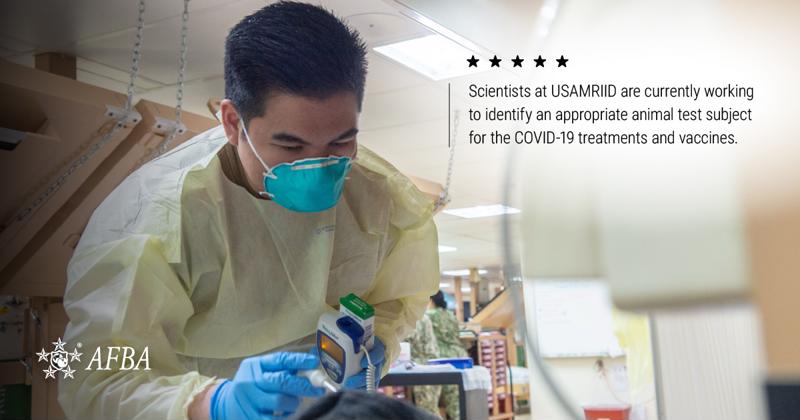
Scientists at USAMRIID are currently working to identify an appropriate animal test subject for the COVID-19 treatments and vaccines, since standard lab mice do not respond to the disease in the same way as humans, due to their genetic makeup. Given the amount of work to be done, senior science adviser Louise Pitt estimates that more than 100 military and civilian scientists will join the ongoing research efforts by summer 2020.
"We have to develop the chemical assays to measure everything," Pitt told Wired. "We have to test for the immune response, the host response, and the disease progression. Because it's a new virus, all the tools have to be built from scratch."
Given the unit's positive track record, Army leadership remains optimistic that a vaccine will be found. "U.S. Army researchers were critical during the SARS epidemic, the Zika virus and the Ebola outbreak as they helped develop antivirals and vaccines," said Army Secretary Ryan McCarthy. "They've done it before and they will do it again."
U.S. Army 'fighting on multiple fronts'
In addition to the work of USAMRIID, Army leadership is taking precautions to protect servicemembers and new recruits from COVID-19.
"The Army is fighting the virus on multiple fronts, from medical support efforts in our cities to searching for a vaccine in order to stay ready, so we can continue to be the Army the nation deserves," explained McCarthy.
The Army has supplemented its nine permanent medical centers with 35 local testing centers. Additionally, the largest Army training post will be equipped to screen 700 recruits each day beginning in late April. The Fort Jackson, South Carolina training post experienced a low number of positive COVID-19 cases earlier this year, but since the adoption of social distancing protocols, testing capabilities and other safety measures, the DOD has reported that the vius has been contained at Fort Jackson.
"The true heroes in this fight are the medical professionals — people like the scientists and researchers at USAMRIID," said Army Chief of Staff Gen. James McConville. "They're working on vaccinations, treatments and better ways to conduct tests that will ultimately help the nation defeat the virus."
AFBA members can learn more about our response to COVID-19 here.
The U.S. Navy's hospital ships Comfort and Mercy — and the servicemembers and health care providers onboard — are actively responding to the COVID-19 national emergency. These vessels are uniquely equipped floating facilities that have had a steady presence and role in crisis response throughout the nation's history.
A history of 'hospitals at sea'
In 1803, during the Barbary Wars, the wooden bomb vessel USS Intrepid was reconfigured as a hospital ship, setting the standard for converting war vessels of all types into medical facilities. Sister ships USNS Mercy (T-AH-19) and USNS Comfort (T-AH-20) both began life as oil supertankers in the 1970s before undergoing conversions in the late 1980s. The USS Relief is the only purpose-built hospital ship in the history of the armed forces.
Hospital ships have provided their services during times of war and peace when foreign enemies, national disasters and pandemics have threatened the nation. The USS Relief provided assistance following the 1933 Long Beach earthquake, and the USNS Comfort aided survivors of Hurricane Katrina in 2005 after providing shelter and relief services to displaced citizens and first responders following the 9/11 attacks.
Vessels including the USS Red Rover during the Civil War and the USS Solace at the Battle of Iwo Jima have offered ambulatory services, transporting and treating wounded servicemembers en route to a safer harbor. During the First World War and the 1918 influenza pandemic, the USS Solace along with two other vessels, also named Comfort (AH-3) and Mercy (AH-4), took in overflow patients in New York and sailed the sick and wounded back home from across the Atlantic.
Onboard the USNS Mercy and USNS Comfort
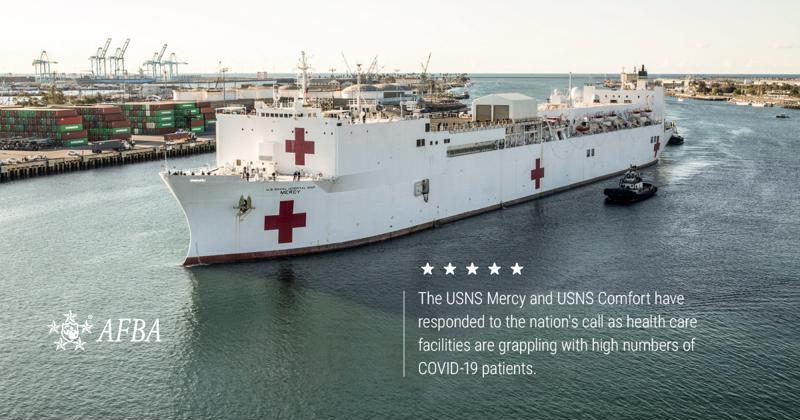
These floating hospitals have responded to the nation's call as health care facilities in major markets have exceeded capacities and grappled with a high influx of COVID-19 patients in addition to others needing medical attention. In March 2020, the hospital ships Mercy and Comfort were deployed to serve the West Coast and New York City, respectively, with the purpose of accepting and treating non-COVID-19 patients.
According to the U.S. Department of Defense, both the Mercy and Comfort hospital ships are nearly 900 feet long and travel at 12 knots. Each can accommodate up to 1,200 health care workers, 71 civil service mariners and up to 5,000 units of blood. There are 1,000 patient beds, 80 intensive care beds and 12 operating rooms, along with medical imaging suites, aboard each. Their white exteriors are emblazoned with nine red crosses, declaring their purpose and signaling that an attack would be considered a war crime.
Re-equipping for the fight against COVID-19
According to the U.S. Naval Institute, fleet systems engineers from the Naval Information Warfare Systems Command (NAVWAR) were called upon to quickly revamp the onboard systems for both vessels while they were en route to their destinations. This included new, fast and secure solutions that rely on fiber optic cables. These systems are critical for managing communications, patient health records and supply inventories onboard and in collaboration with partnering medical centers on land.
"We have been at the center of incorporating advanced technologies that enable new operational concepts for decades and today is no different," said NAVWAR Commander Rear Adm. Christian Becker in a Navy statement. "We have and will continue to innovate, lead and drive ways to speed delivery of advanced capabilities when and where needed to win this fight."
Military service members, firefighters and power industry workers regularly go into the line of duty outfitted in flame-resistant or fire-resistant (FR) clothing. Contractors have embraced innovative textiles to keep uniforms — and the people who wear them — safe. Here is a look at the occupational hazards that necessitate FR clothing and what FR uniforms must do.
Occupational risks
The mission of a firefighter necessitates clothing that can hold up to intense heat and raging flames. FR turnout gear and station wear must reliably offer high levels of thermal protection. But first responders are not the only brave professionals who require carefully engineered protective apparel.
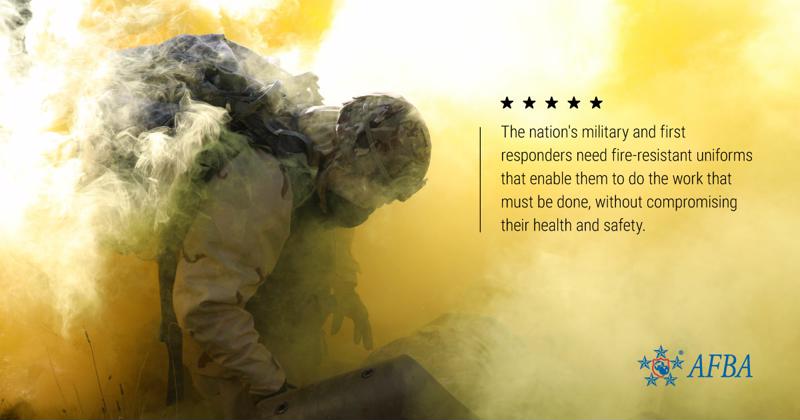
Whether handling ammunition or withstanding enemy fire, the nation's military service members are constantly in harm's way. They need uniforms that enable them to do the work that must be done, without compromising their health and safety.
But, according to FR uniform manufacturer DRIFIRE, unsuitable textiles had been putting service members at risk. In 2007, two Marines were killed during a roadside bombing incident when their undergarments melted onto their skin. These garments were polyester — a plastic material which ignites, melts and drips when exposed to heat. Even when a uniform's outer layers are fire-resistant, improper base layers can still pose serious hazards. DRIFIRE notes that the U.S. Marines approached their company for a safer solution following this incident.
In the electric power industry, FR apparel is just as essential. According to the Occupational Health and Safety Administration (OSHA), the heat of an electric arc can exceed the surface temperature of the sun. Even a split-second blast can cause severe or fatal injuries. Combustible dust, flash fires and other unforeseen accidents mean that workers should be properly dressed at all times.
The role of fire-resistant clothing
Working hand-in-hand with OSHA, the Department of Defense and the National Fire Protection Association, the protective apparel industry has made significant strides since the early 2000s.
Workers facing heat, fire and electrical hazards are now required to wear FR clothing from head to toe, and from their undergarments to their outermost jackets. When layered properly, FR apparel provides a higher level of protection that is greater than what's offered by each individual piece.
For anyone serving in the armed forces, on an emergency response team or in the power industry, specialty clothing made from FR textiles is one important component of the personal protective equipment (PPE) that is worn.
For the greatest protection and comfort in the line of duty, fire-resistant uniforms should be:
- Inherently flame-resistant, meaning that the FR properties will not wash away or wear out. Rather than being finished with an FR treatment, the fibers and weave structure must offer the flame resistance themselves.
- Self-extinguishing to prevent the spread of fire, reduce the risk of burns and give workers time to return to safety.
- No-melt and no-drip to avoid bonding to the skin and causing severe burns.
- Low-smoking and non-toxic to prevent smoke-related injuries as the garment self-extinguishes.
- Slightly loose-fitting (but not excessively baggy) to create an insulating layer of air between each piece of clothing and the skin that helps resist the heat.
- Comprehensive with different pieces that are worn together, from the undergarments, middle layers and outerwear to headgear, additional uniform components and weather-related accessories.
- Moisture-wicking and fast-drying to help regulate body temperatures and keep workers as comfortable as possible in hot, stressful and physically demanding situations.
- Antimicrobial to prevent the growth of bacteria inside the uniform.
- Compliant with industry requirements.
Fibers that are prone to melting and dripping such as polyester, rayon, nylon and acetate are generally not utilized for FR clothing. Although natural fibers like cotton and wool will burn to ash rather than melt, they aren't entirely suitable either as they are not self-extinguishing.
Instead, companies in the protective apparel industry have developed and patented specialty textiles. These consist of a blend of unique fibers and innovative weave structures that meet the many demands of the field and keep service members and industry workers who wear FR clothing safe.
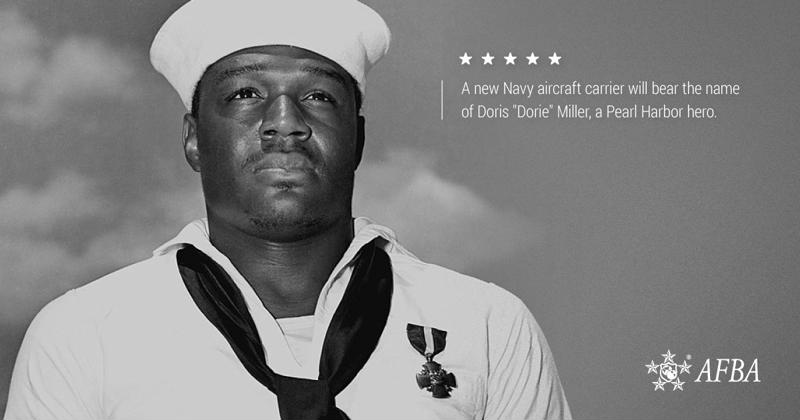
On Martin Luther King Jr. Day, 2020, Acting Navy Secretary Thomas Modly christened a new Navy aircraft carrier in honor of the African American WWII hero Doris "Dorie" Miller. The ceremony was held in Pearl Harbor, the site where Miller demonstrated combat valor that earned him the Navy Cross in 1941.
Miller's service in the racially segregated Navy
Born in 1919 as the grandson of enslaved laborers, Dorie Miller was raised in the segregated community of Waco, Texas. After dropping out of high school in order to help his family make ends meet, Miller looked to the armed forces for a source of steady work. In September 1939, at 19 years old, he enlisted in the U.S. Navy.
At that time, African American men who wished to enlist had to attend a racially segregated boot camp and were restricted to serving in the role of messman. Black mess attendants essentially worked as servants to white officers. They were responsible for shining shoes, making beds, doing laundry and waiting tables. And, instead of wearing buttons with the Navy's insignia on their uniforms, men like Dorie Miller were given uniforms with unmarked buttons.
On the basis of race, these mess attendants were ineligible for promotion or special training. And the only interaction black Navy servicemembers were allowed to have with gunnery was to feed ammunition to primarily white gunners.
Becoming a Pearl Harbor hero
Miller was transferred to Pearl Harbor aboard the battleship West Virginia, due to growing pressure between U.S. and Japanese forces.
Dorie Miller was below decks doing laundry the morning of Dec. 7, 1941 when the Japanese Imperial Navy launched a surprise attack. He immediately sought an assignment and was tasked with carrying his mortally wounded commanding officer, Capt. Mervyn Sharp Bennion, to shelter.
While the battleship sustained continued torpedo damage and heavy air fire, Miller started feeding ammunition into a machine gun, under orders from a junior commissioned officer. Noticing an unattended second gun, Miller jumped into action, launching fire on the Japanese planes overhead with absolutely no training or experience.
According to Navy Times, Miller later recalled that "when the Japanese bombers attacked my ship at Pearl Harbor I forgot all about the fact that I and other Negroes can be only messmen in the Navy and are not taught how to man an antiaircraft gun."
After exhausting his store of ammo, Miller proceeded to rescue other Sailors from the waters and decks as they were engulfed in flames. He was one of the last three men to exit the West Virginia.
Miller's heroism soon circulated in stories out of the Navy's press office, although his name remained unattached to his actions. Eventually, after much debate, Miller was awarded the Navy Cross in May 1942, becoming the first African American Sailor to be recognized with the medal. He then conducted a war bond tour, speaking across the country and urging black communities to support the war effort.
Miller's death and legacy
On Nov, 24, 1943, Miller was aboard the escort carrier Liscome Bay, which was loaded with massive quantities of oil, bombs, and ammunition. After being hit by a Japanese torpedo, the ship exploded, killing Miller in action.
While Miller's actions and memory did not end racism and segregation in the U.S. Navy, they did serve as a catalyst for lasting change. After his death, the Navy launched a program that graduated 13 African American officers in 1944. In 1973, a new Navy destroyer was named in Miller's honor to carry on his legacy.
"He died as he lived, an American sailor defending his nation, shoulder to shoulder with his shipmates, until the end," Modly said during the recent aircraft carrier naming ceremony. "Dorie Miller stood for everything that is good about our nation. His story deserves to be remembered and repeated wherever our people continue to stand the watch today."
On March 5, we commemorate the Navy Seabees by remembering their heritage and extensive contributions to Naval history.
Who are the Navy Seabees
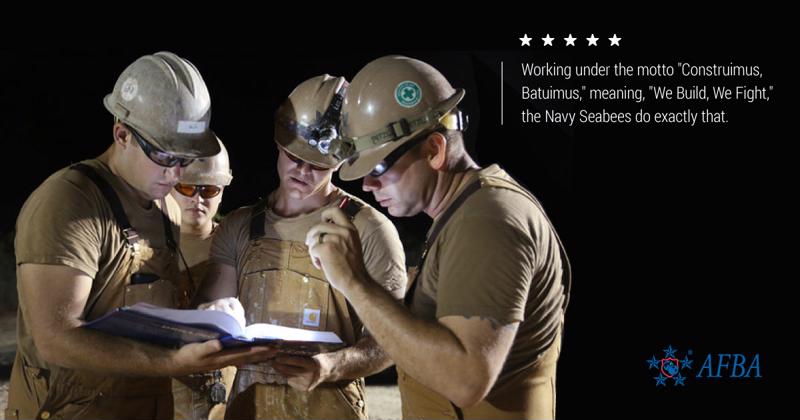
Working under the motto "Construimus, Batuimus," meaning, "We Build, We Fight," the Navy Seabees do exactly that.
The Seabee designation refers to enlisted members and officers assigned to the U.S. Naval Construction Battalions, the Naval Construction Force (NCF) and enlisted members in the Navy's occupational field 7 (OF-7).
The unit's unusual name comes from the pronunciation of C.B. for "Construction Battalions." This has inspired the Seabee logo, which depicts a buzzing bee wielding construction tools.
Since WWII, Navy Seabees have been part of every major conflict the U.S. military has participated in. They have also dedicated their unmatched trade skills and military prowess to protect our nation and further humanitarian efforts, even in times of peace.
How the Seabees began
The Naval Construction Battalions were born out of a long tradition of utilizing Sailors' building skills to construct and maintain bases. But the Seabee unit was not formalized until the Second World War.
During WWII, the U.S. had contracted some 70,000 construction workers who were located at shore bases around the globe. But the use of civilian labor in international war zones was highly problematic. As civilians, these tradespeople had no legal protections and could not defend themselves against enemy attack. If they were to fight back, they would be classified as guerrillas and could be subject to battlefield execution, according to international law.
To address the need for skilled tradespeople with military might, Admiral Ben Moreell put forth an innovative proposal on Dec. 28, 1941. Moreell conceived of a new type of military unit that possessed the necessary construction trade skills and the flexibility to participate in a wide variety of large-scale projects.
On Jan. 5, 1942 the Bureau of Navigation granted Moreell the power to recruit construction workers for three newly created Naval Construction Battalions. U.S. Civil Engineer Corps officers were granted command authority over the enlisted members and officers of these units.
During recruiting, the emphasis was put on technical skills, so the earliest Seabee population skewed much older than the average Navy recruit. Experienced in more than 60 trades, some of the first Seabees had honed their craft working on highways, subways, quarries, dams, docks and skyscrapers. But they also received advanced military training, which came in handy during frequent interactions with the enemy.
The Seabee name was officially adopted on March 5, 1942 — hence the birthday commemoration on this date. By the end of WWII, roughly 325,000 enlisted members and nearly 8,000 officers called themselves Seabees. Together, they participated in building more than 400 bases which helped pave the way to an Allied victory. Initially considered part of the Navy Reserve, this militarized construction unit became a permanent part of the Navy in 1947, so that they could serve in peacetime as well as wartime.
Remembering Seabee contributions to Naval history
While most Seabees are part of Naval Construction Battalions or the NCF, the unit has and continues to serve in additional capacities.
Notably, during WWII, Seabees served on Naval Combat Demolition Units and were among the first ashore at Normandy on D-Day, being responsible for dismantling the German-built barriers designed to prevent amphibious landings. Other Seabees have worked tirelessly throughout the Korean War, Vietnam War, Desert Shield and Desert Storm.
Throughout their history, special units have been assigned to complex projects that call for advanced, highly specialized trade skills. Seabees have also made contributions to the U.S. Marine Corps and are consistently involved in public works projects, disaster recovery initiatives and humanitarian efforts.
On the March 5, we recognize and honor the men and women of the Navy Seabees.
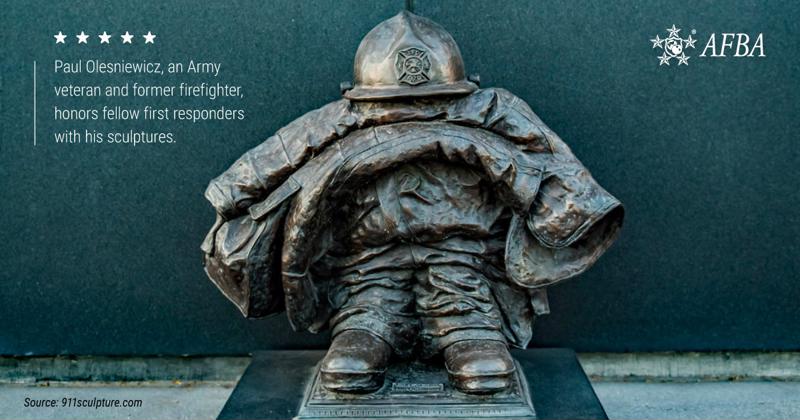
Paul Olesniewicz, an Arizona-based sculpture designer, veteran and former firefighter, has created over 40 memorials honoring first responders and the military.
The sculptor's early career as a servicemember and first responder
Olesniewicz completed his service with the United States Army in 1972. He then returned to his home state of Arizona and began a firefighting career spanning three decades.
"There is an old saying that time flies when you're having fun," Olesniewicz said in an interview with the Professional Firefighters of Arizona Magazine. "Well, I must have had the time of my life, for my 32 years in the fire service seemed to have passed in the blink of an eye — an eye with crows, feet that is,"
Olesniewicz began with the United States Forest Service in Flagstaff, then spent a few years at the William Air Force Base in Mesa as a civilian firefighter where he worked in structural firefighting and crash and rescue. The majority of his fire service career was spent with the Tucson Fire Department.
911 Sculptures unites a passion for firefighting and fine arts
Six years after leaving Army service — and in the midst of his firefighting career, Olesniewicz earned a Bachelor of Fine Arts in sculpture at Northern Arizona University.
It was not until 1994 that he founded his own creative business, 911 Sculptures. Olesniewicz and his team design and create statues honoring first responders including firefighters, EMTs and police officers, as well as members of the military, including those who have made the ultimate sacrifice.
As Olesniewicz says on the business's website, "My goal is to convey the dedication and pride exhibited by firefighters throughout the history of the fire service. I feel extremely fortunate to be able to combine my firefighting experience with my love of art and sculpture."
His work is on display at memorial sites, museums, fire departments and private residences. In 2007, he retired from his firefighting career and began running 911 Sculptures on a full-time basis.
The creative process behind each custom project
To create one of his lifelike statues, Olesniewicz starts with a steel armature and builds out the form using clay. This enables him to achieve an impressive level of detail in the figures' uniforms and expressive faces.
He then takes the full-sized clay sculpture off to a foundry where ceramic molds are created. Molten bronze is carefully poured into the molds. Once cool, the metal pieces are sand-blasted, assembled and welded together. Finally, Olesniewicz applies a patina and protective coat of wax.
Once complete, pieces created by 911 Sculptures are ready to weather the elements and stand as reminders of the daily sacrifices first responders and military members make in service to their community and country.
Olesniewicz works with departments of all sizes across the nation to create custom projects of all scales. One special example is the Tucson Fallen Firefighters Memorial, completed in 2009. This features five life-sized bronze sculptures, including one firefighter wearing full turn-out gear, holding his helmet over his heart. This figure faces a memorial wall engraved with the names of those who lost their lives in the line of duty.
"I like to believe my firefighting background gives me a unique perspective on how important firefighter commemorative and memorial sites are to their communities, departments and their loved ones," Olesniewicz said. "I find it very rewarding to help in my small way to honor our hard-working and brave brothers and sisters. It is the best of both worlds."
Visit the interactive map on the 911 Sculptures website to find Olesniewicz's work at a public site near you.
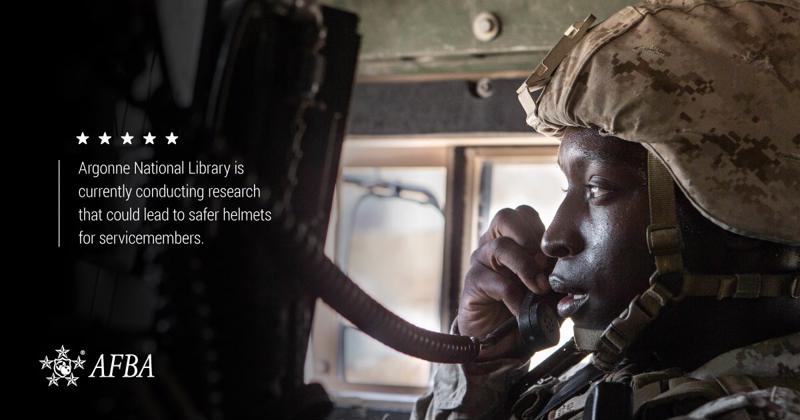
The most detailed study of the human skull is currently underway at Argonne National Laboratory in Illinois. The ongoing scientific research, which began in June 2019, may lead to the development of safer ballistic helmets for U.S. armed forces.
In partnership with the Army Research Laboratory (ARL), the helmet safety research project is being led by a research group based at the Advanced Photon Source (APS), a U.S. Department of Energy Office of Science User Facility at Argonne.
High-powered X-rays make new skull insights possible
The sensitive, highly powered beams available at APS are central to better understanding the microstructure of the human skull.
"By putting these [X-ray beams] on the bone, we can then see things about the bone in the skull that we couldn't with other techniques," beamline scientist and group leader Jonathan Almer, Ph.D., said in a National Defense Magazine interview. "That allows us to do things with time and space scales that you couldn't do with laboratory X-rays."
More specifically, APS' X-ray analysis is helping researchers understand the directionality of the skull bones' crystalline collagen structure. With this information, they can better understand what happens to these microscopic components following a blunt force impact. Knowing precisely how the energy disperses and how it modifies the bones themselves can enable helmet designers to develop more effective protections.
Researchers strive for more accurate models of bone behavior
The researchers have been working with cadavers and preserved skull samples that were fractured in previous ARL studies. These samples exhibit the effects of a bullet as well as a helmet on the skull.
"Bullet to helmet to skin to skull to brain," ARL team lead Karin Rafaels explained in an Argonne press announcement. "We have to get the models right all the way through — for our Army mission and for our understanding of bone in general."
The models in question are computer models used to inform helmet design. The bones in the skull are constructed differently from load-bearing bones like the femur, which tend to fracture in predictable ways. And yet, it is these bone behavioral models that helmet design has relied upon. The researchers are eager to develop new, more accurate models representative of the skull itself based on their X-ray imaging experiments.
This level of detail has already proven to be enlightening. "Even in quick reconstructions of the data, we could already see differences between the structures of the femur compared to the skull," Rafaels added.
Implications for military helmet design
According to Rafaels, with the assistance of APS' powerful imaging technology, the researchers "can see if there are preferable loading pathways, or ways to distribute or direct the force of the impact, so that we can design our helmets to take advantage of the skull's crystal structure."
Popular Mechanics compared the skull's collagen structure and likely behavior to that of woodgrain and gemstones: These materials will split easily along the grain but are more resilient when approached across the grain. The helmet of the future may be able to distribute the energy of an impact in a way that takes advantage of these characteristics.
As Almer noted, "By better understanding the mechanics of the skull, we can then design helmets that would generally be better" for use in the U.S. military, which requires hundreds of thousands of helmets to keep its servicemembers safe. The ideal product is a stronger but more lightweight helmet that can be reliably and economically mass-produced.
This study's findings may also be helpful to the sporting world, Almer added, where enhanced sports helmet safety also remains an important yet elusive objective.
According to a Pew Research Center study into the lives of post-9/11 military veterans, 36% suffer from post-traumatic stress. For some, a service dog may provide a sense of security and empowerment. Unfortunately, accessing such resources has proven to be a challenge.
While there are channels through which veterans can get paired up with service dogs, there are still certain limitations. Additionally, there's an ongoing conversation about proposed legislation that could subsidize service dogs for veterans with PTSD.
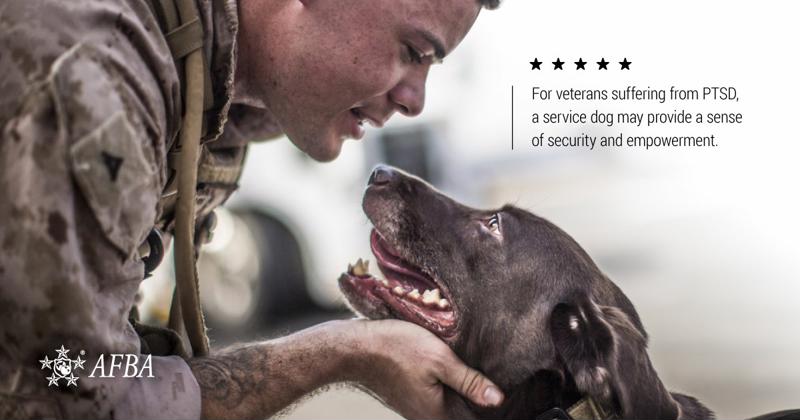
VA support stalls while clinical research continues
While the VA subsidizes service dogs for vets diagnosed with physical disabilities, the department has cited a lack of clinical proof as its reason for withholding support for psychiatric service dogs for veterans with PTSD. The VA has dedicated $16 million to studying this subject since 2011. Findings from the VA study — titled "Can Service Dogs Improve Activity and Quality of Life in Veterans With PTSD?" — are slated for release later in 2020.
In the meantime, a growing body of evidence suggests that there are definite benefits. During a 2018 Purdue University study, members of the College of Veterinary Medicine compared the cortisol production patterns of veterans with service dogs to those on the waitlist without a canine companion.
According to researcher Kerri Rodriguez, the team observed patterns "closer to the cortisol profile expected in healthy adults without PTSD. Having a service dog was also associated with less anger, less anxiety, and better sleep."
As Suzy Wilburn of the nonprofit Southeastern Guide Dogs told Military Times, "The dogs are never going to be a cure for [PTSD], they're simply going to be a tool to help [veterans] in their recovery with it."
Service dog advocates in Congress have proposed a new piece of VA legislation known as Puppies Assisting Wounded Service Members, or the PAWS Act. This would create a grant program through which diagnosed veterans could receive $25,000 from the VA to adopt a service dog. However, progress has stalled since 2016.
Nonprofits offer service dogs for veterans with PTSD
Those interested in finding service dogs for veterans with PTSD should connect with accredited nonprofits that are members of the following organizations:
- The International Guide Dog Federation.
- Assistance Dogs International.
- The Association of Service Dog Providers for Military Veterans.
The process of adopting a service dog can take years, with many approved vets assigned to waiting lists. It can be expensive, too; the VA estimates that training and follow-up support for just one dog and its recipient cost $25,000.
It can also change a veteran's family dynamic, so support is essential. In an interview with Military Times, Mike Drafts of K9s for Warriors advised that "this is a lifestyle change like no other, […] it's almost like you're adding a third person to a relationship."
The application process typically includes:
- Submitting formal application documents.
- Sharing a medical history and diagnosis.
- Consenting to a criminal background check.
- Providing personal references.
- Completing a series of interviews.
- Attending training courses.
However, not all those who apply to these programs qualify. Nonprofit personnel look for veterans who are actively receiving mental health treatment and who don't have any history of violence that would jeopardize the dog.
They also work with vets to understand their goals in working with a service dog. For instance, some veterans look for assistance in coping with daily activities and outings while others need support for nightmares and panic attacks at home.
Access to psychiatric service dog support is more limited than it may be in the future. However, veterans can always access the Veterans Crisis Line by dialing 1-800-273-8255 and pressing 1, texting 838255 or initiating a live chat conversation with a VA responder.