
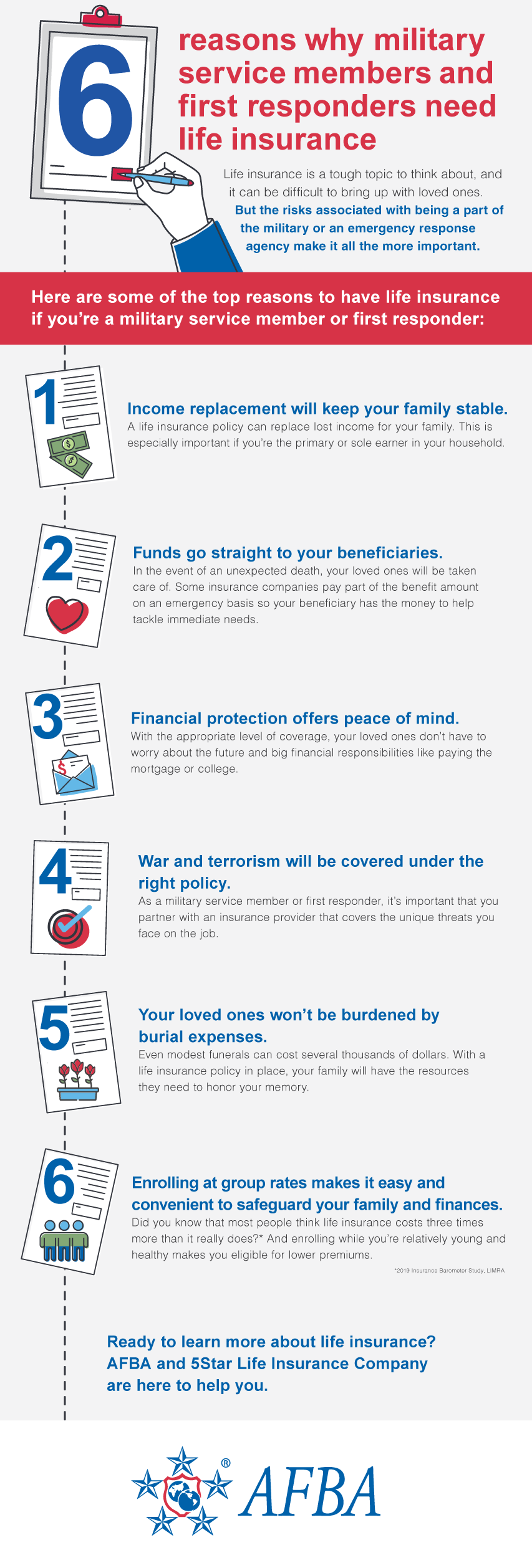
Since 2017, California has experienced a succession of wildfires that caused historic levels of destruction. At the start of this year, U.S. firefighters were helping battle the Australian bushfires for the first time in a decade. Presently, teams are diligently working to suppress wildfires raging up and down the West Coast, from Washington and Oregon to California.
Given the extreme and unpredictable nature of these incidents, first responders must use a variety of specialized tactics to beat back the blazes. Understanding what happens on the fireground and how skilled firefighters manage and suppress these outbreaks year after year is an important way to recognize their efforts and honor their sacrifices.
Establishing control lines to manage the spread of wildfires
Firefighters strategically create and use boundaries to keep wildfires in containment. These can be natural boundaries, such as rivers, or engineered ones where teams manipulate the landscape to remove any potential fire fuel sources and limit its spread.
Creating a true fire line involves stripping the land down to the soil, but teams often create preliminary scratch lines when they need to work quickly. They'll also establish temporary wet lines by applying water or fire-retarding chemicals to the ground. Explosives are also used to quickly taking down flammable trees and brush.
Suppressing flames and embers to keep wildfires in check
When faced with a sizeable wildfire, firefighting teams have to make tactical decisions about how, when and where they will work to extinguish the flames. They will work on the fireground and conduct aerial attacks to keep the fire under control.
Often, the first step will be hotspotting. This involves assessing the overall behavior of the fire and suppressing specific points that pose the highest threat of spreading quickly or causing damage. Teams will also knock down or reduce the heat and flames in particularly active parts of the fire's outer edge using water, soil and fire-retarding chemicals.
Once areas have been contained, firefighters will still work diligently to ensure that the control line remains intact. A mop-up is when embers and burning materials near the control line are removed or extinguished. Cold trailing is a technique where firefighters inspect the "dead" fire edge for any signs of heat. They'll often feel around with their hands to locate and dig out any embers or hot spots.
Using strategic, controlled fires to support containment efforts
It might be surprising to learn that firefighters actually light small fires as a way to manage larger blazes. For instance, teams might conduct a burn out within a new control line to use up the available fuel and bolster the effectiveness of the created boundary. Similarly, firefighters will create backfires downwind of a major fire to change its direction. These advanced techniques require a great deal of experience and careful attention the wildfire's movements.
Initiating prescribed fires to promote healthy ecosystems and reduce risk
Wildfires are a force of nature, and they play a role in keeping ecosystems healthy. A significant amount of scientific research goes into understanding that role and how it can be accomplished in a contained manner that doesn't endanger human lives. The U.S. Forest Services explains that strategic prescribed fires throughout the year help maintain the right balance and reduce the risk of unwanted, uncontrolled outbreaks.
After a major wildfire is successfully extinguished, the work continues with Burned Area Emergency Response efforts. Teams of soil scientists, vegetation specialists, hydrologists, engineers and other experts will evaluate a scorched area. Their assessment will help determine how to stabilize and rehabilitate the environment so it remains safe for the plants, animals and people that inhabit the region.

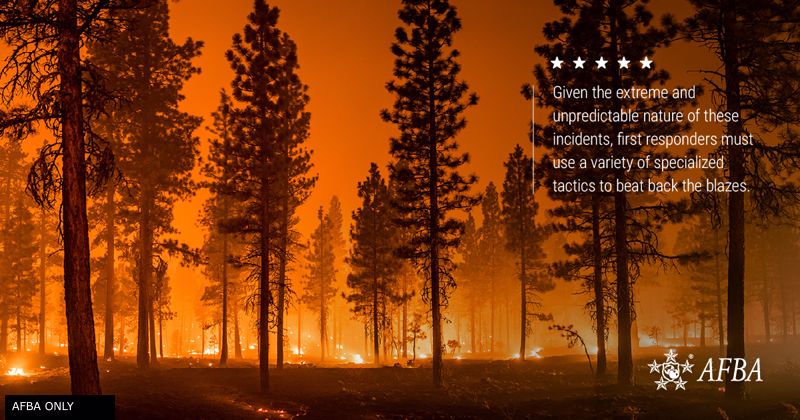
The majority of firefighters serving in the U.S. battle the blazes on a volunteer basis, according to the National Fire Protection Association. As of 2018, some 745,000 volunteer firefighters made up 67% of the field.
This line of work poses an unusual level of risk compared to other volunteering opportunities, with an average of 5,330 non-fatal injuries impacting volunteers on the fireground each year. Despite the dangers, what attracts people to these roles? Let’s explore some of the top benefits of being a volunteer firefighter.
 “The appearance of U.S. Department of Defense (DoD) visual information does not imply or constitute DoD endorsement.”
Giving back to the community
People who volunteer in any capacity often choose to do so as a way to serve their community and make a meaningful difference.
“The fabric of our nation is strengthened by the service of its volunteers,” CEO of the Corporation for National and Community Service, Barbara Stewart, explained in a press release announcing record-high volunteering numbers. “Each and every day, ordinary Americans are stepping up to support their fellow citizens to help with needs both great and small because they understand the power service has to change communities and lives for the better.”
In that regard, volunteer firefighting offers a unique chance to step in where help is needed most, and impact lives by keep community members, homes and businesses safe.
Feeling a sense of accomplishment
Working as a volunteer firefighter offers a tangible sense of achievement, pride and accomplishment. Not only does this happen through serving others in a volunteer capacity, but volunteers can also take pride in working as part of a team, developing new skills, protecting lives and property and successfully diffusing emergency situations.
Gaining skills and real-world experience
Volunteer roles have a special attraction for aspiring career firefighters. When it comes time to apply for full-time jobs, employers often favor applicants who have hands-on experience working on the fireground. The technical skills and specialized training gained from a volunteer position will certainly help prepare emerging professionals for a career in firefighting.
However, critical soft skills in areas like communication and collaboration can be transferrable skills in any career context. Professional development training programs available through these types of roles can help volunteers bolster their leadership and incident response skills as well.
Connecting with like-minded people
Someone seeking a volunteer firefighter position will be welcomed by a community of passionate, like-minded individuals when they join a local department. This can be an exciting way to make lifelong friends and enjoy camaraderie and fellowship while also growing one’s professional network.
Volunteering on a flexible schedule
Volunteer firefighters aren’t on call around the clock or every day of the year. Instead, they have the opportunity to choose how much time they dedicate to serving with the department. This means they can balance other personal and professional commitments while still having many opportunities to participate in the rewarding work of a firefighter.
Receiving some form of compensation
Just because it’s volunteer work doesn’t mean it’s devoid of any compensation. In fact, the National Volunteer Fire Council notes that fire departments offer tangible benefits to acknowledge the time and money volunteer firefighters spend serving their communities. While each department offers a different set of benefits, possible forms of compensation include:
- Reimbursements for gas or meals.
- Payment for time spent on a call.
- Subsidized insurance.
- Scholarships or tuition assistance.
- Lodging for students.
- Retailer discounts.
- Tax deductions.
- Awards.
- Seasonal bonuses.
- Uniforms and other accessories.
Anyone interested in getting involved and reaping the benefits of being a volunteer firefighter can contact their local fire department to learn more about available opportunities.

If your summer travel plans have been canceled this year due to the COVID-19 pandemic, remember that you can still make memories in your own backyard. Sitting around a fire pit can be a fun way to kick back and enjoy the long summer nights — as long as everyone remains responsible.
Keep your family safe and make the first responders and firefighters in your community proud by practicing these important fire pit safety rules.
Choose the safest spot for your fire pit
Your fire pit should be located out in the open — never underneath a structure or tree. Since sparks can easily travel, ensure that you're not lighting a fire near a wall or fence, a pile of dried leaves or chopped wood or any other flammable materials.
Check for wind conditions and no-burn advisories
As for the weather, choose a calm night rather than a windy day. Beyond making it difficult to start a fire, wind can make flames unpredictable and scatter embers, potentially causing a fire outside of the pit. If your area is under a no-burn advisory, remain compliant and help keep your community and air quality safe.

Adhere to social distancing guidelines
When planning a get-together at your home, remember to follow CDC guidelines regarding COVID-19 and social gatherings. For the lowest risk of transmission, limit your gathering to only members of your household. If you invite other friends, neighbors or family members, keep six feet apart from each other at all times. With two families, for instance, you could place chairs on opposite sides of the fire pit so you don't come into contact. If you're enjoying snacks, drinks or s'mores ingredients, don't share supplies. Instead, ask each household unit to bring their own items.
Keep kids under adult supervision
Before the party even begins, take the opportunity to educate children on general fire safety habits. Once the flames start growing, children should be under constant adult supervision. Keep little ones at a safe distance from the fire pit and watch older kids to ensure that they don't toss anything into the fire or get too close to the flames.
Dress appropriately to minimize the risk of clothing fires or burns
Anyone who plans to attend to the fire or hold roasting sticks near the flames should be dressed properly, with closed-toe shoes, close-fitting garments and tied-back hair. Loose clothing and hair can more easily alight, and falling embers can burn bare feet. Remind your guests to "stop, drop and roll" if they need to extinguish a clothing fire.
Ensure that everyone drinks responsibly
An important aspect of fire pit safety comes down to how you and your guests behave around the open flames. If you choose to make alcoholic beverages part of your festivities, drink responsibility and in moderation. Alcohol-related accidents can create a host of hazards and injuries. Not only does alcohol impair your judgment and coordination but spills are highly flammable.
Don't mix flammable bug spray and fires
At night, mosquitos can be real pests, so you may be tempted to apply bug spray. But insect repellant is highly flammable and can lead to major injuries if your hair or clothes get showered with sparks. Smoke is a natural bug repellent, so spray should not be necessary.
Never leave the flames unattended
A critical aspect of fire pit safety is to always keep an eye on the flames. If you need to run inside for even a few seconds, ask a responsible guest to attend to the fire pit while you're away. Make sure they know how to extinguish it safely as well.
Fully extinguish embers before turning in for the night
After a night making memories and practicing backyard fire pit safety, you must remember to put out the fire and embers completely. Follow the Forest Services' step-by-step instructions: douse the live embers with water, rotate and scrape down logs to ensure they're no longer burning, mix the ashes with soil, check that everything is cool to the touch with your hands and add some more water before leaving the site.
The month of June is a time for recognizing and raising awareness about posttraumatic stress disorder (PTSD).
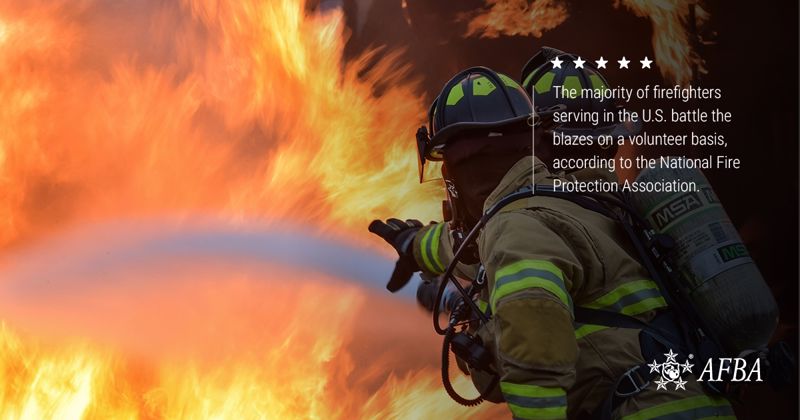
Military servicemembers, veterans and first responders are among the many people whose work exposes them to traumas that can lead to PTSD. This mental health issue impacts about 8 million adults per year in the U.S., and roughly 7-8% of the population will experience PTSD throughout their lives, according to the National Center for Posttraumatic Stress Disorder (NCPTSD), part of the U.S. Department of Veterans Affairs (VA).
 “The appearance of U.S. Department of Defense (DoD) visual information does not imply or constitute DoD endorsement.”
What is PTSD?
The NCPTSD defines PTSD as “a mental health problem that some people develop after experiencing or witnessing a life-threatening event, like combat, a natural disaster, a car accident, or sexual assault.” When a traumatic event causes prolonged symptoms and disruptions in a person’s life, it may be a sign of PTSD.
Experiencing all of the following symptoms would lead a mental health care provider to issue a PTSD diagnosis, according to the NCPTSD:
- Avoiding situations, places and experiences that could recall the traumatic incident.
- Reliving the incident through unwelcome memories and invasive flashbacks.
- Increasingly experiencing negative feelings like sadness, numbness, shame and lack of interest or trust.
- Feeling on edge or hyperaroused and being irritable or unable to sleep or focus as a result.
Anyone experiencing even one of these symptoms can benefit from speaking with a mental health professional.
What is PTSD treatment like?
Treating and overcoming PTSD can be mentally and emotionally draining, and many individuals experiencing symptoms may not feel ready to begin. However, the sooner they start working through therapeutic treatment, the more quickly they can move forward from the traumatic incident and find relief.
It is also important to note that there is nothing wrong or embarrassing about seeking out help for mental health conditions such as PTSD. Anyone experiencing tooth discomfort would visit a dentist who has the right training, tools and outside perspective to see inside their client’s mouth, pinpoint the cause of pain and begin the healing process. In the same way, anyone experiencing the disruption and pain of posttraumatic stress can enlist the help of a therapist who possesses the right training, tools and outside perspective to see into their client’s heart and mind and begin the healing process.
During trauma-focused psychotherapy or cognitive behavioral therapy, a client and therapist typically meet for about an hour and discuss the traumatic event, working from specific treatment goals. According to the Anxiety and Depression Association of America (ADAA), effective treatment methods include:
- Cognitive processing therapy: By exploring the feelings, thoughts and emotions they are left with in the wake of a traumatic incident, individuals with PTSD can work to rewrite those thought patterns.
- Cognitive restructuring therapy: By reexaming what actually happened during the event, versus what memories remain, individuals can overcome feelings of guilt, shame and responsibility for the traumatic incident.
- Prolonged exposure therapy: By revisiting the traumatic memory, individuals with PTSD can explore their emotions and reduce the overpowering impact of that memory so it no longer causes a disruption in their daily life.
- Stress inoculation training: By practicing new ways to manage posttraumatic stress and emotions, individuals can better cope with their symptoms. This treatment is often used in conjunction with other therapies.
- Eye movement desensitization and reprocessing therapy: By exploring negative emotions and memories while focusing on specific visual or audible cues, individuals can change how they respond when those memories resurface.
- Present centered therapy: By examining current experiences rather than the trauma itself, individuals can witness the impact of that incident on their present-day life and work to better manage those issues.
- Prescription medication: A psychiatrist may prescribe medication as part of treatment to provide their clients experiencing PTSD with more of the stress-management chemicals their brain is lacking.
The NCPTSD PTSD Decision Aid is a helpful tool for those who want to learn more about treatment options and consider which one might be the right fit.
Countless small and local businesses are suffering from the impacts of lockdown orders in cities across the country. And yet, so many have found creative ways to give back to the frontline health care heroes and emergency response workers fighting the COVID-19 pandemic.
Read on to find out how local businesses around the nation are donating goods and services to first responders and health care workers responding to COVID-19.
 “The appearance of U.S. Department of Defense (DoD) visual information does not imply or constitute DoD endorsement.”
Making and donating essential items
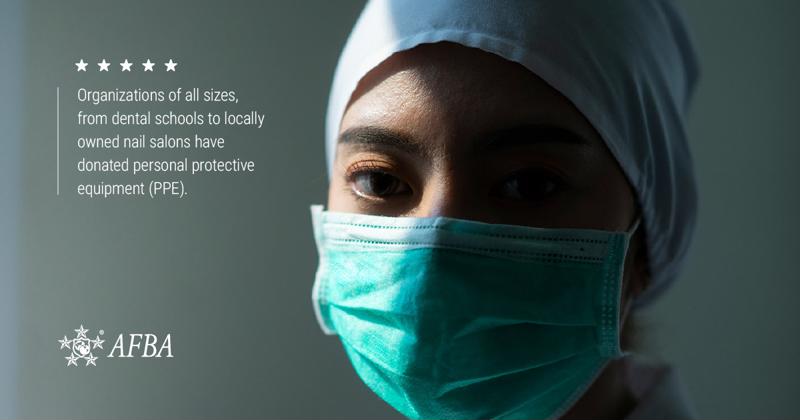
Organizations of all sizes, from dental schools to locally owned nail salons have donated personal protective equipment (PPE) — including N95 masks, gloves, gowns, face masks and other essential supplies — to health care workers and emergency response departments.
Companies with manufacturing facilities have switched over to produce in-demand supplies. For instance, nearly 800 distilleries have turned their attention from making small-batch spirits to creating and distributing hand sanitizer, according to the Distilled Spirits Council.
Offering free technologies and services
While many companies have been faced with workforce reductions and layoffs, numerous organizations are accelerating hiring and onboarding to bring more qualified professionals to the front lines of the coronavirus pandemic. To support these efforts, some HR companies are making their recruiting software and services free to these organizations, according to Human Resource Executive.
Similarly, companies in the mental health sector are offering free services like meditation app subscriptions to those facing the stressful workplace realities of COVID-19.
Sharing gifts of gratitude
Restaurants around the country are donating food and beverages to essential workers. Some bring balanced meals to those working long shifts, while others donate special treats like desserts and bottles of wine as a way to show gratitude. Dairy farms have also donated gallons of milk to local emergency workers and health care professionals.
Retailers that sell everything from comfortable walking shoes to fine jewelry are donating their products to workers out on the front lines, in an effort to make each day a little brighter. A spa franchise[located where] has invited its members to donate spa treatments that essential workers can redeem for some relaxation and renewal once the facilities re-open.
Even unexpected donations can make a big impact. For instance, a roofing company in Charleston, South Carolina has committed to constructing three new roofs on the homes of an EMT, nurse and police officer in its community. Actions like these show that it doesn’t really matter what a company does; as long as they approach the situation with a spirit of generosity and gratitude, they can find creative ways to lighten the load for those out on the front lines of the fight against the coronavirus.
Additional ways to give back
If you operate a local business — or wish to jointly support the small businesses and COVID-19 responders in your community — there are plenty of ways to give back in whatever ways you can. Consider the following ideas:
- Contact local health care organizations and first responder agencies to find out if they are accepting supply donations.
- Host a fundraiser and donate the proceeds to an organization in need of financial support.
- Announce a giveaway of the product or service you offer, and invite your customers to nominate emergency responders.
- Make your product or service available for free to those in desperate need.
- Purchase goods from companies that are donating funds or products for each purchase made.
- Buy gift cards from local businesses and donate them to first responders or health care workers in your community.
Additionally, saying “thank you” with a simple handwritten note or a banner in your front yard can go a long way to making those serving in your community feel your support.
Flyover salutes by the Navy's Blue Angels and Air Force's Thunderbirds are paying tribute to the essential workers, health care professionals and first responders serving in cities across the country in response to the COVID-19 pandemic. The two elite flight demonstration squadrons have flown individually and jointly over major and mid-sized cities hit hardest by the coronavirus outbreak.

Operation America Strong
President Trump announced the flyover plans during an April 22 press briefing, explaining, "We're paying tribute to our frontline health care workers confronting COVID. And it's really a signal to all Americans to remain vigilant during the outbreak."
Called Operation America Strong, the initiative is intended to salute those fighting on the front lines of the national emergency, while demonstrating a sense of national solidarity with those emergency workers.
"This is a tribute to them, to our warriors. Because they are equal warriors to those incredible pilots and all of the fighters that we have for the more traditional fights that we win," the President said. "Operation America Strong was the idea of our great military men and women — the Thunderbirds and the Blue Angels crews who wanted to show support to the American medical workers who, just like military members in a time of war, are fiercely running toward the fight."
Army and Navy unite for a collaborative salute
The Thunderbirds and Blue Angels first appeared together on April 28, when they flew over New York, New Jersey and Pennsylvania. Since then, they have appeared over Maryland, Connecticut, Delaware, Georgia, Texas and the nation's capital. The Blue Angels have completed flyover salutes over Florida and Louisiana, with additional visits anticipated from both demonstration squadrons.
In keeping with Department of Defense policy, the Blue Angels and Thunderbirds are not often seen together. "Each demonstration team showcases U.S. military aviation capabilities to the public separately to maximize Navy or Air Force recruiting efforts," the Blue Angels website explains. For this reason, the joint air demonstrations during Operation America Strong are especially rare and significant displays of national strength and unity.
"We are truly excited to take to the skies with our Navy counterparts for a nation-wide tribute to the men and women keeping our communities safe," said U.S. Air Force Lt. Col. John Caldwell in a Navy statement. Caldwell serves as Thunderbird 1 and the flyover mission commander. "We hope to give Americans a touching display of American resolve that honors those serving on the frontline of our fight with COVID-19," he added.
"We are incredibly honored to have the opportunity to salute those working on the frontline of the COVID-19 response, we are in awe of your strength and resilience," added U.S. Navy Blue Angels commanding officer and flight leader Cmdr. Brian Kesselring. "Thank you to all of those in essential industries keeping our nation moving forward. We will get through this. We are all in this together."
The demonstration squadrons typically participate in numerous air shows throughout the year, many of which have been canceled as a result of the pandemic. Each impressive, high-speed air display costs an estimated $60,000 — but funds for Operation America Strong has been drawn from already budgeted funds, the Washington Post reported.
While a complete schedule has not been announced, destinations and flight paths are being issued one day prior to each flyover. Citizens wishing to witness the flyover salutes in their cities are encouraged to remain in their homes, uphold social distancing measures and refrain from gathering in crowds.
The COVID-19 national emergency has been immensely demanding on the community of U.S. emergency responders and health care workers. For many, traumatic stress in the workplace is being compounded by an unprecedented lack of normalcy at home. There, first responders and health care professionals must contend with the personal difficulties of social distancing, disruptive closures of schools and businesses, and the extreme economic uncertainty that may have a direct negative impact on family and friends.
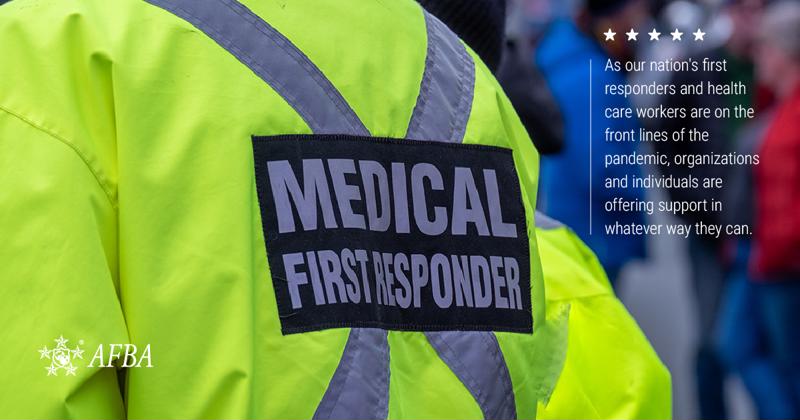
As our nation's heroic first responders and health care heroes are fighting on the front lines of the pandemic, countless organizations and individuals are offering support services in whatever ways they can. This brief list aims to assist those participating in or impacted by the national response to COVID-19 by providing authoritative support resources during this challenging time — and by highlighting the fact that there are many resources available for all aspects of life.
Workplace resources
In addition to comprehensive guidance for the general public, the Centers for Disease Control and Prevention have published a collection of Resources for First Responders and Law Enforcement. These include advice for workers in the fields of law enforcement, emergency medicine, fire services and emergency management who may come into contact with citizens potentially experiencing COVID-19 symptoms.
The Occupational Safety and Health Administration has published COVID-19 Standards, including a section on workers' rights and employers' responsibilities that discusses OSHA's Whistleblower Protection Program and the prohibitions against employer retaliation in the event that a safety or health complaint is filed.
Mental health resources
The Minnesota Department of Health's COVID-19 Responder Self-Triage daily checklist is designed to help emergency workers and health care professionals recognize and manage high levels of stress, including exposure to traumatic stress. As the document explains, "Understanding your trauma risk will help you realize when you need to activate stress management activities to increase your resilience."
The National Suicide Prevention Lifeline maintains a resource hub related to Emotional Wellbeing During the COVID-19 Outbreak. People in crisis can speak with mental health counselors on a 24/7 basis at 1-800-273-8255 or through a live chat.
Family resources
The National Association of School Psychologists has published a guide titled Helping Children Cope With Changes Resulting From COVID-19. This includes strategies for discussing the coronavirus outbreak with children in a way that reduces stress and fear and helps younger family members feel informed, reassured and safe.
Similarly, Talking With Children: Tips for Caregivers, Parents, and Teachers, During Infectious Disease Outbreaks, produced by the Substance Abuse and Mental Health Services Administration, outlines how children at different ages may behave in response to a crisis like COVID-19, offering age-appropriate communication advice for adults.
Financial resources
Local nonprofits and organizations around the country have come together in support of those experiencing financial hardships. The Community Foundation Public Awareness Initiative is maintaining a list of organizations in each state committed to providing COVID-19 relief funds and other support resources.
First responder families experiencing financial difficulties can apply for individual grants through the COVID-19 Emergency Response Fund, operated by the First Responders Children's Foundation. The organization is currently working to raise $200 million to support impacted families.
Information regarding Coronavirus Tax Relief and Economic Impact Payments can be found on the IRS website. Payments are being issued on a rolling basis beginning in April 2020; no action is required for most individuals and families. Additionally, the tax filing deadline has been pushed to July 15, 2020.
To learn more about first responder financial benefits available through AFBA, read our recent message to members or contact a customer service agent. You can reach us by emailing [email protected] or calling 1-800-776-2322.
The U.S. Navy's hospital ships Comfort and Mercy — and the servicemembers and health care providers onboard — are actively responding to the COVID-19 national emergency. These vessels are uniquely equipped floating facilities that have had a steady presence and role in crisis response throughout the nation's history.
A history of 'hospitals at sea'
In 1803, during the Barbary Wars, the wooden bomb vessel USS Intrepid was reconfigured as a hospital ship, setting the standard for converting war vessels of all types into medical facilities. Sister ships USNS Mercy (T-AH-19) and USNS Comfort (T-AH-20) both began life as oil supertankers in the 1970s before undergoing conversions in the late 1980s. The USS Relief is the only purpose-built hospital ship in the history of the armed forces.
Hospital ships have provided their services during times of war and peace when foreign enemies, national disasters and pandemics have threatened the nation. The USS Relief provided assistance following the 1933 Long Beach earthquake, and the USNS Comfort aided survivors of Hurricane Katrina in 2005 after providing shelter and relief services to displaced citizens and first responders following the 9/11 attacks.
Vessels including the USS Red Rover during the Civil War and the USS Solace at the Battle of Iwo Jima have offered ambulatory services, transporting and treating wounded servicemembers en route to a safer harbor. During the First World War and the 1918 influenza pandemic, the USS Solace along with two other vessels, also named Comfort (AH-3) and Mercy (AH-4), took in overflow patients in New York and sailed the sick and wounded back home from across the Atlantic.
Onboard the USNS Mercy and USNS Comfort
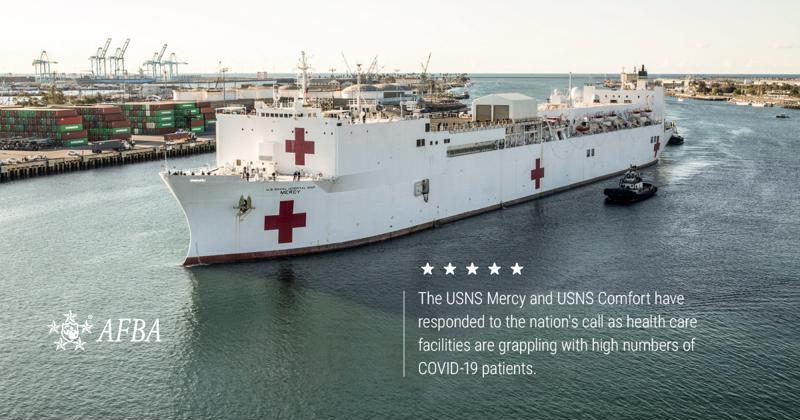
These floating hospitals have responded to the nation's call as health care facilities in major markets have exceeded capacities and grappled with a high influx of COVID-19 patients in addition to others needing medical attention. In March 2020, the hospital ships Mercy and Comfort were deployed to serve the West Coast and New York City, respectively, with the purpose of accepting and treating non-COVID-19 patients.
According to the U.S. Department of Defense, both the Mercy and Comfort hospital ships are nearly 900 feet long and travel at 12 knots. Each can accommodate up to 1,200 health care workers, 71 civil service mariners and up to 5,000 units of blood. There are 1,000 patient beds, 80 intensive care beds and 12 operating rooms, along with medical imaging suites, aboard each. Their white exteriors are emblazoned with nine red crosses, declaring their purpose and signaling that an attack would be considered a war crime.
Re-equipping for the fight against COVID-19
According to the U.S. Naval Institute, fleet systems engineers from the Naval Information Warfare Systems Command (NAVWAR) were called upon to quickly revamp the onboard systems for both vessels while they were en route to their destinations. This included new, fast and secure solutions that rely on fiber optic cables. These systems are critical for managing communications, patient health records and supply inventories onboard and in collaboration with partnering medical centers on land.
"We have been at the center of incorporating advanced technologies that enable new operational concepts for decades and today is no different," said NAVWAR Commander Rear Adm. Christian Becker in a Navy statement. "We have and will continue to innovate, lead and drive ways to speed delivery of advanced capabilities when and where needed to win this fight."
A new piece of Indiana legislation seeks to expand the definition of “first responder” to include public safety workers as well as 911 call-takers and dispatchers.
Indiana House Bill 1198 is a bipartisan proposal with support from five Republican sponsors and three Democrat sponsors. The bill passed the Indiana State House in January 2020 and the Senate in February. and has been signed by the Speaker of the House as well as the President of the Senate. As of March 18, 2020, it stands as an enrolled act, meaning it has been sent to Gov. Eric Holcomb for approval. The act would go into effect in July of this year.
 “The appearance of U.S. Department of Defense (DoD) visual information does not imply or constitute DoD endorsement.”
Defining ‘first responder’
“Public safety matters,” the Indiana bill states. It seeks to update the definition of first responder in Indiana to include those who are employed or volunteer as:
- Law enforcement officers.
- Corrections officers.
- Firefighters.
- Emergency medical service providers.
- Emergency management service providers.
- Public safety telecommunicators.
- “Any other individuals whose duties in serving a public safety agency include rapid emergency response.”
Currently, there is no formal definition of “first responder” at the federal level, although the phrase is often used by government leaders and advocates of the first responder community.
However, the synonymous term “emergency response provider” is defined in 6 U.S.C. 101(6) as “Federal, State, and local governmental and nongovernmental emergency public safety, fire, law enforcement, emergency response, emergency medical (including hospital emergency facilities) and related personnel, agencies and authorities.”
Increasing access to support resources
The Indiana bill seeks to clarify who these “related personnel” are. This not only honors the efforts of these unsung heroes but will make first responder support resources available to those who may need them.
“It is not just police, fire and EMS that have that connection with the people.” Ed Ward, Chief of Wabash Township Fire, said in a local news interview with WLFI. He added that the network of emergency response workers is more expansive than what has been acknowledged in the past.
Although Ward noted that it may be seen as just “an administrative law change,” he believes that “getting this bill passed is a huge step for Indiana” — and those working in the occupations soon to be designated as first responders.
“Some of those folks are incredibly impacted by that job,” Ward added, suggesting the mental health consequences of the high-stress dispatcher and public safety officer occupations.
At present, 911 call-takers and dispatchers are identified as “office and administrative support” workers, but this new legislation recognizes that their job responsibilities are not like other office and admin jobs.
Individuals in these roles may soon be eligible for benefits that have been restricted to law enforcement officers and other colleagues working on the front lines.
“They’ve never really thought that dispatchers would get PTSD,” Rob McMullen of Knox County Dispatch explained in an interview with 44News. “But [if] you figure in the dispatch community, they don’t really have a lot of people to talk to.”
Both Ward and McMullen believe this piece of legislation points to changes at the federal level. “It’s just the first step in getting classified federally,” McMullen said, where these hardworking emergency professionals “[may] be able to get some different benefits.”
First responders are often eligible for financial assistance programs, retirement funds, mental resources and support for surviving family members.