
President Donald Trump's 2019 federal budget proposal would increase the budget for the Department of Veterans Affairs by $198.6 billion, according to Military Times. That part of the proposal drew widespread support, particularly from veterans advocates.
A detailed breakdown of the proposal indicates a comprehensive strategy to address the issues that affect today's veterans, including:
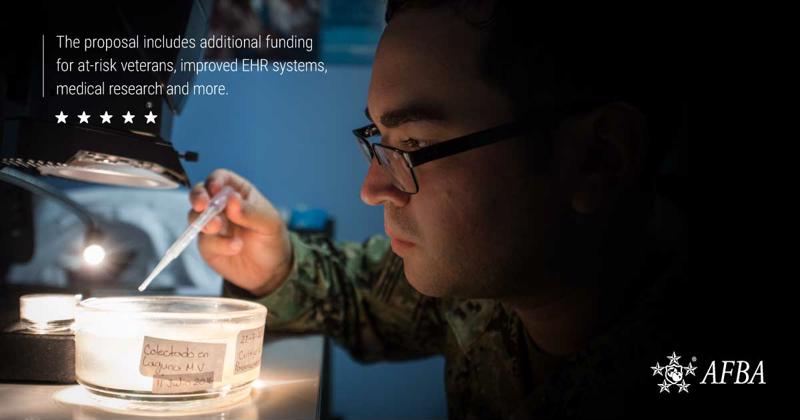
- $1.6 billion in funding for support services that assist at-risk and homeless veterans.
- $1.2 billion allocated to modernize veterans' electronic health records.
- $727 million dedicated to medical and prosthetic research.
- $511 million to fund gender-specific healthcare services for female veterans.
- $381 million to find and support alternative pain management methods that reduce veteran reliance on opioids.
If passed, the proposal would be a significant increase in VA funding occurring as budgets for other departments are constrained. The VA budget was less than $49 billion in fiscal year 2001, per Military Times, and reached $93.7 billion in fiscal 2009. Similarly, President Trump allocated more money to the VA just last year when he signed the VA Choice and Quality Employment Act. This bill received widespread bipartisan support and, again, praise from veterans's advocate groups.
The act allocated $3.9 billion in funding to support the Veterans Choice Program, which was nearly bankrupt at the time, according to Stars and Stripes. The majority of the funding – $2.1 billion, to be precise – was designated for the Choice program to help veterans find care provided outside VA clinics and hospitals. The remaining $1.8 billion will be used to hire more staff, improve existing VA facilities and open 28 new clinics.
"This bill will ensure veterans will continue to have the ability to see the doctor of their choice," Trump said. "So important. Our great veterans deserve only the best and that's what they're getting."
The future of the VA budget – what would the money be spent on?
In all likelihood, the allocated funding will be, in some ways, spent on health-related technology. This theory is based on a recent report reviewed by the Federal Times which found the VA is on course to be the top agency for government health IT spending within the next five years. By 2020, the VA will account for 40 percent of such spending. Currently, the Department of Health and Human Services is the top health IT spender, but the Affordable Care Act mitigated those expenses somewhat.
Much of what will cause the VA to overtake the HHS is a new electronic health records system that the former plans to implement. Last year, then-Secretary of Veterans Affairs David Shulkin announced the agency would use the same platform as the Department of Defense to better allow both agencies to transfer health records as needed. This would make the transition from active servicemember to veteran much easier from a healthcare perspective, as it would eliminate the need for doctors and servicemembers to fill out separate forms with the same information.
"Our new electronic health records system will enable VA to keep pace with the improvements in health IT and cybersecurity, which the current system, VistA, is unable to do," said Scott Blackburn, the VA's acting Chief Information Officer.
The initial rollout of the new EHR system is expected to begin June 2019, which aligns with the above budget proposal and the prediction that VA health IT spending will soon increase. Per a separate Federal Times article, project is expected to cost $10 million and would be the biggest EHR system implementation in history.

Dogs are more than our best friends; they're also one of our greatest protectors. Nowhere is this statement more true than within the military and first responder groups across the country. Countless K-9 units of four-legged heroes have worked alongside human companions to protect American citizens.
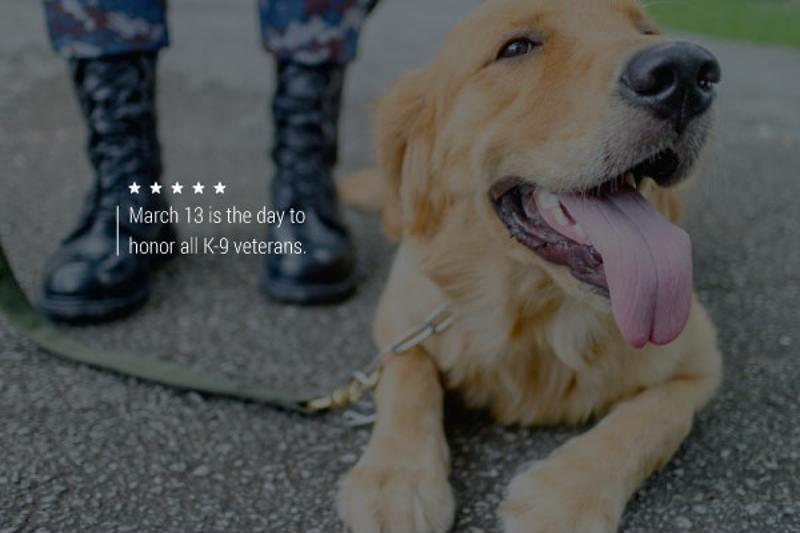
Joe White, a retired working dog trainer, believed these animals deserved recognition. He advocated for March 13 to become an official holiday known as K-9 Veterans Day. Former Florida governor Charlie Crist agreed with White, making Florida the first state to acknowledge the holiday. According to the Defense Media Network, White was proud to see the dogs honored and sent Crist a heartfelt email.
"Dogs have served with honor throughout the history of our country's birth and growth, and have served at many jobs in all of our wars," White's email read. "They, too, served, bled and died for our freedom."
White is completely correct; the nations K-9s have done incredible things in the name of freedom. Join AFBA in celebrating K-9 Veterans Day by learning about the history of these courageous animals.
A brief history of trained service dogs
The U.S. Army first began training dogs for military purposes on March 13, 1942, as part of the War Dog Program, also known as the K-9 Corps. What started as nine trained dogs grew to more than 10,000 before the end of World War II.
Still, these were only the first official dogs to serve in combat. U.S. military forces used dogs in an unofficial capacity years before. One of the original and most famous was Sgt. Stubby, a stray terrier mix who was unofficially adopted by a soldier named Robert Conroy. Their bond grew so strong that Conroy and his fellow soldiers smuggled the dog onboard the SS Minnesota as the unit was deployed to Europe in October 1917. Although he was discovered, Stubby won the heart of Conroy's commanding officer with a well-timed salute.
Stubby initially served as the unit's mascot, providing emotional support to the soldiers. On February 5, 1918, however, Stubby displayed his bravery by following Conroy across a battlefield under constant fire. The unit soon realized Stubby could hear artillery and smell gas before either hit – a talent that kept soldiers safe and prevented the enemy from gaining the upper hand. Stubby even sniffed out a German spy wearing an American uniform. For his bravery, Stubby was promoted to sergeant, granted several medals and got to meet three First Ladies.

Sgt. Stubby may have been the first to be formally recognized, but he certainly wasn't the last. Smoky the Terrier served an important role during World War II. Found in a foxhole, Smoky became one of the first therapy dogs and visited injured soldiers. She also helped her owner's unit string communication wire across an old Japanese airfield. The area lacked telephone poles, and digging new trenches for the wires would have exposed them to the enemy. Instead, they used Smoky to pull the string through old pipes.
"You couldn't get a dog in a thousand to go through a dark tunnel like that that they'd never seen before," Cpl. Bill Wynne, Smoky's owner, told NPR. During the war, Wynne purchased Smoky from her original rescuer for six dollars. "But she was well-trained in obedience, and she did it because I asked her to. She trusted me."
K-9 units today
These days, K-9 units are some of the most revered servicemembers and first responders around. Yet many people wonder what happens after they've served their time. Although many die in combat, the 2016 National Defense Authorization Act allows retired military dogs to come home and gives their handlers first priority for adoptions. Similarly, many police canines are adopted out or retire to live with their handlers – a fitting, comfortable end to several years of service.
Female veterans face unique struggles after their service – some of which mirror the complications they faced in the military. Thankfully, a growing number of resources from the public, government and other vets are emerging to help them.
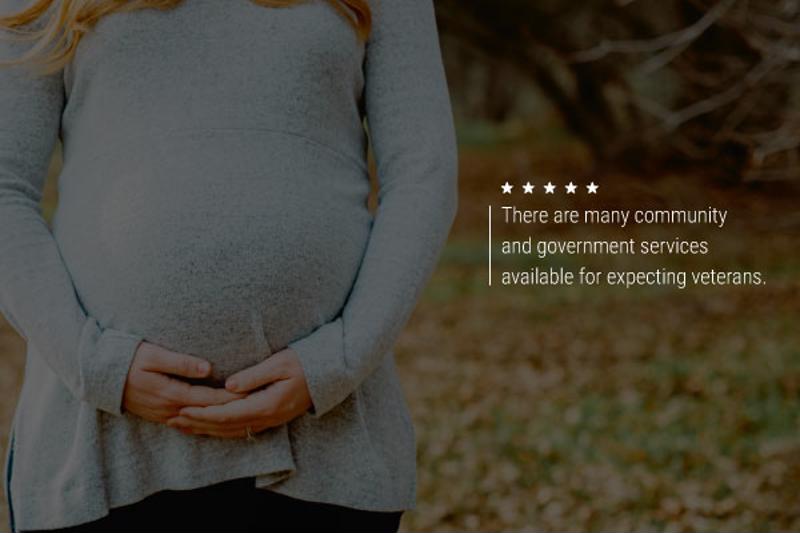
One such resource comes in the form of a woman named Diane Ahrens of East Dundee, Illinois. A former servicemember herself and owner of Piece-A-Cake Bakery, Ahren has helped coordinate baby showers for Chicago-area expecting veterans for the past three years.
A growing event to support pregnant veterans
According to the Chicago Tribune, attendance at the baby shower events has grown steadily each year.
"The first year we only had four signed up and by the time of the shower, we had 11 or 12," Ahrens told the newspaper. "Last year, we had 25. This year, we're working toward 30."
The bakery provides desserts, while other restaurants offer entrees. In addition, the attendees receive free baby essentials, which are provided by donations and community partnerships. This year, fundraising efforts and help from a local Kohl's Cares group collected $5,000 in toys, formula, car seats, diaper bags and other items.
Ahren herself is no stranger to the struggles of an expecting veteran; she got pregnant approximately 30 years ago after serving in the Marines. Afterward, Ahren was a single mother for seven years. Her participation in the baby shower events stemmed from her desire to help women experience the same things she did, no matter how small that help may be.
The unique struggles of female veterans
Debates have gone back and forth about women's roles in the military, but it's clear the armed forces are growing more gender inclusive. That said, certain procedures and persistent beliefs still present obstacles.
As one article on Task and Purpose detailed, most military equipment is made for a man's physique, not a woman's. Ill-fitting armor and weaponry puts servicemembers in danger, as one Navy supply officer discovered when her unit was attacked in Afghanistan. The incident left her back and neck permanently damaged – all because she wore the wrong armor. Furthermore, the lack of proper care and resources worsens the already high-stress environment of the military.
These struggles don't end after women return to civilian life. Female veterans are the fastest growing homeless population in the U.S. In addition, the U.S. Department of Veteran Affairs found women vets were 2.5 times more likely to commit suicide than their civilian counterparts.
With this in mind, current female veterans should never be afraid to seek support. Feeling that they need to adhere to a standard set for others will do them more harm than good.
Thankfully, the VA provides many services to meet women's specific needs, including maternity care and family planning. Women who are pregnant or are trying to get pregnant are encouraged to talk to their healthcare provider for prenatal and preconception, maternity and newborn care services. Veterans who are struggling to get pregnant can also contact the VA for infertility counseling, assessment and certain treatments.
The department also offers family planning services for women who want to delay motherhood for the foreseeable future. Women can choose between multiple birth control methods, including pills, shots, implants, IUDs and other devices.
Motherhood can be complicated, but the struggle for female veterans can be even greater. Thankfully, many local and national services are dedicated to giving them the support they need.
U.S. military veterans are finding new purpose by serving their country in a different way. Though their time protecting American freedoms is up, they're now supporting medical research through the Million Veterans Program.
First veterans, now MVPs
Launched in 2011, the MVP is a voluntary research program funded entirely by the Department of Veterans Affairs Office of Research and Development. It connects military veterans with genetic researchers to help the latter study how genes affect health. In doing so, scientists believe the MVP will give insight into the hereditary aspects of diseases like diabetes, cancer and heart disease in addition to helping uncover the reasons why and how some people respond to certain medications. The research will also help scientists learn more about military-related illnesses like post-traumatic stress disorder.
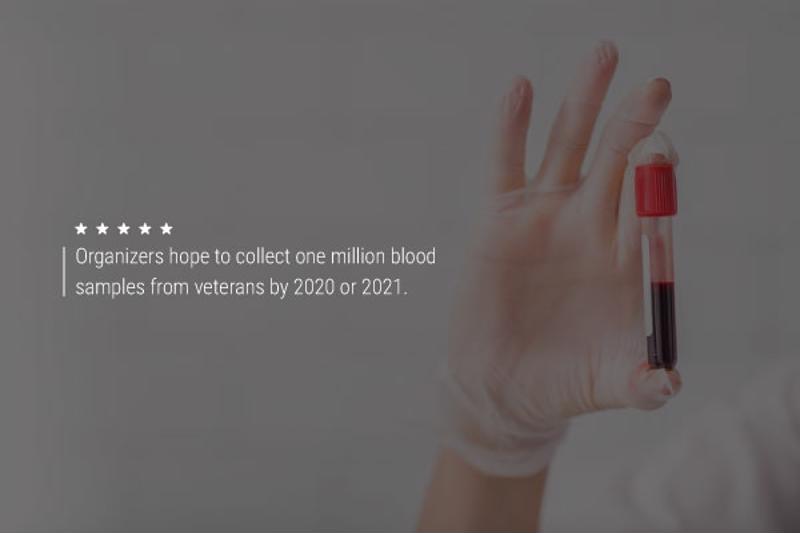
The ultimate goal of the MVP is to collect health information and blood samples from at least one million military veterans. This collection would be one of the world's largest and most racially diverse medical databases.
Veterans are not enrolled in the program automatically; they may choose to participate or, if they don't wish to join the program, keep their records private. To be part of the study, vets must fill out a survey about their current health and behaviors in addition to having a sample of their blood drawn. Furthermore, they must allow researchers to access their VA and VA-linked health information, including all past and future data. Finally, vets must agree to remain in contact with MVP organizers in the future.
Why military veterans?
Some might consider that, after years of valor and sacrifice, having veterans participate in medical research is asking too much. However, vets are the perfect sample for such studies.
Heath researchers need large sample sizes for their research but often have a hard time locating enough participants. Given that there were approximately 20.4 million veterans in the U.S. as of 2016, according to the VA, researchers can easily find enough people to provide a healthy data set.
In addition, veterans using VA services have consistent medical records, which provide for better research. The average citizen switches health providers and/or insurance companies multiple times throughout their life, so their records aren't centralized or – in some cases – even complete. Veterans, meanwhile, have decades of consistent records in one database, so health officials don't have to worry about inaccuracies.
That said, many veterans experience encounters during their service that could have had a genetic impact. Studies show chronic stress affects chromosomes in a manner that, according to the American Psychological Association, can contribute to cellular aging and increase the risk of heart disease, cancer and diabetes. MVP researchers are aware of this fact and will structure their research accordingly.
Additionally, the majority of military veterans are male, which would skew the database in terms of gender. According to the Milwaukee Journal Sentinel, women make up approximately 8 percent of current MVP participants, and organizers are working to get more female volunteers. Still, the current sample is one of the most racially diverse in the world. African-American participants make up 17 percent of the group, Hispanics 7 percent and American Indians 2 percent.
The MVP's present and future
The program currently has over 630,000 veterans, according to the Milwaukee Journal Sentinel. Organizers plan to gather the full one million genetic samples by 2020 or 2021. However, researchers have no plans to wait to get started. Eight studies are already in progress, and more are expected to begin shortly.
So far, scientists have begun or plan to start using the collected genetic samples to research:
- Mental health issues, including PTSD, substance abuse, bipolar depression and schizophrenia.
- Chronic heart and kidney disease.
- Diabetes.
- Tinnitus.
- Breast cancer.
- Age-related macular degeneration.
The breadth of conditions these genetic samples can provide insight on is yet another way for veterans to continue serving their country.
A new partnership between a technology company and a wounded veterans service would provide smart glasses to former servicemembers suffering from vision problems. According to U.S. Veterans Magazine, the Wounded Warrior Program, Minton-Jones Company and Ability One vendors are working with Cyber Timez, Inc., a company that designs augmented reality applications for smart glasses, to bring these novel devices to veterans with blindness or low vision. The project would help such vets live more independent lives.
The smart glasses are equipped with a high-definition camera and an optical character recognition engine, allowing them to effectively "read" text and transmit it aloud to veterans. The sound waves go directly into the ear, so whatever the wearer is reading remains private and he or she doesn't disturb others. The glasses are also independent of the cloud, so veterans don't need an internet connection to use them.
With this technology, blind and vision-impaired veterans can effectively read signs, manuals and any other text or documents without assistance. The software can read text in over 100 languages, identify over 16 billion objects, scan barcodes to identify various products and interpret more than 1,000 colors. It even has the capacity to decipher a person's mood based on his or her face. The glasses can also magnify details up to 15 times, which can be life changing for veterans with low vision.
"Our goal with this project at the Wounded Warrior Program is to outfit thousands of American veterans and wounded warriors impacted by low vision and blindness, both men and women with smart glasses to help them find jobs, improve their quality of life and give them financial independence," said Wounded Warrior Program National Director Dr. David Godbold.
When it comes to the issues servicemembers face, most people think of amputated limbs and traumatic brain injuries rather than vision problems. However, blindness and vision impairment are both combat risks and have already affected thousands of veterans.
Blindness as a result of combat
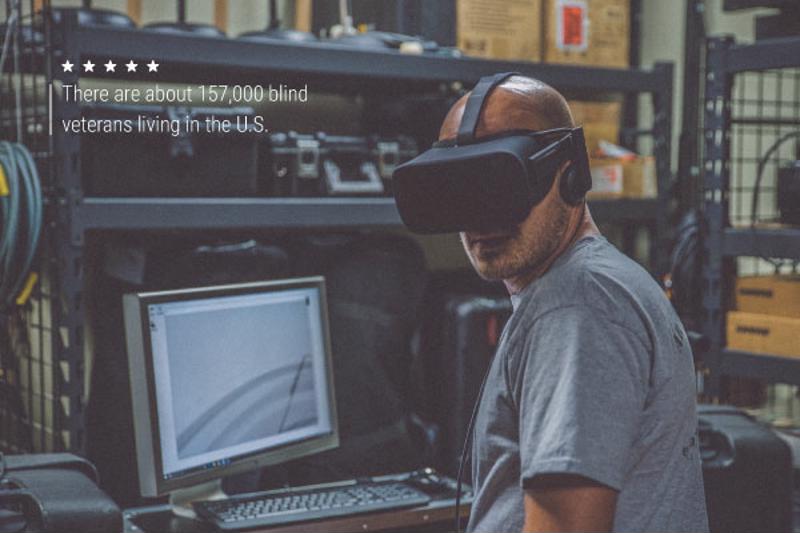
According to the U.S. Department of Veterans Affairs, there are about 157,000 blind veterans living in the U.S. The VA estimates at least an additional 1 million veterans are visually impaired.
For many veterans, these disabilities are caused by standard issues such as age-related macular degeneration, diabetic retinopathy, stroke, cataracts and glaucoma. Nevertheless, their service is reason to include such naturally developing conditions under the umbrella of "veterans issues."
That said, veterans can also suffer vision problems as a side effect of traumatic brain injuries. According to the VA, blindness or low vision affects as much as 64 percent of servicemembers with TBIs.
While experiencing vision loss can be frustrating, veterans shouldn't lose hope. They can regain independence with technological innovations like smart glasses and find other assistance through organizations like the Wounded Warrior Program, the Blinded Veterans Association, the National Association of Blind Veterans and the Defense and Veterans Brain Injury Center. They should also look for rehab centers designed specifically for blind veterans, like the Gulf Coast Veterans Rehab Center in Biloxi, Mississippi. As the Associated Press reported, this specific center has helped 173 veterans reclaim their lives.
"It opens those doors for independence once again," said Facility Chief Debra Gilley, according to the Associated Press. "It's wonderful to see somebody who has been sitting at home on the couch thinking that life is not open to them anymore, and to see them out crossing the street and getting out there."
Veterans with vision problems should not seclude themselves from the world. With the help of local disability resources and ground-breaking tech, they can regain the confidence to be active in society once again.
Starting this month, discharged veterans will be able to identify themselves a little more easily. Instead of keeping their copy of their discharge papers, which are commonly referred to as DD-214s, they can get a photo ID card from the Department of Veterans Affairs by applying on the VA's website.
This new method results from the Veterans Identification Card Act, a law passed in 2015. Per the legislation, the VA must issue a hard-copy photo ID to any discharged veteran who applies. Representatives stated the VA will provide the cards at no cost, although the law does allow the government body to collect a fee.
The legislation makes it much safer for veterans to carry identification. Before, the only form of ID most vets had was their DD-214, which proved cumbersome for vets to keep on their persons. In addition, DD-214s contain sensitive information like birth dates and Social Security numbers. Carrying these forms around increased the risk of veterans becoming victims of identity theft or fraud.
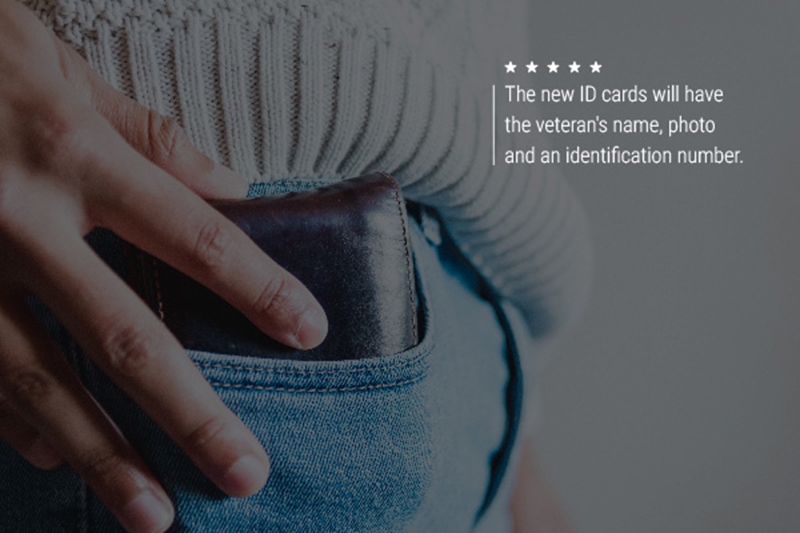
The new cards, on the other hand, will only have the holder's name, photo and a non-Social Security identification number.
Previously, methods of identifying veterans were inconsistent across the country. Only military retirees receive a retiree card from the Defense Department, and only certain veterans can get a photo ID VA health card. Similarly, many, but not all, states allow veterans to identify themselves on their drivers licenses. This new system provides a more uniform, standardized and secure way for vets to prove their service for non-government reasons – for example, to receive military appreciation discounts from retailers.
However, not everyone is completely satisfied by the new ID option. Many veteran advocates are upset because the new cards aren't available to everyone who served.
Identifying veterans with other-than-honorable discharges
As the Army Times pointed out, the Act states that the VA must provide a new ID to any veteran who requests one and presents a document from their military personnel file or a copy of their DD-214 form. However, VA Press Secretary Curt Cashour recently confirmed that only veterans with "honorable service" will be eligible.
Advocates believe this unfairly punishes veterans suffering from mental health issues. They note that many instances of drug abuse and minor insubordination, which lead to dishonorable discharges, stem from untreated mental health issues. Additionally, as Military.com noted, LGBTQ servicemembers who were publicly outed before the repeal of "Don't ask, don't tell" were also dishonorably discharged.
"I find it incredibly frustrating, and deeply hurtful, that the VA would deny hundreds of thousands of veterans like me our very identity, after all that we know today about the nexus of PTSD and bad paper," said Kris Goldsmith, who received a dishonorable discharge. Goldsmith is the founder of High Ground Veterans Advocacy.
The decision to deny cards to vets with other-than-honorable discharges is surprising given that just this summer, the VA reversed its existing policy on mental health care. Prior to July, only honorably discharged veterans could receive these services. Now, those with so-called bad paper can receive emergency mental health support.
In the eyes of VA Secretary David Shulkin, allowing other-than-honorably discharged veterans to receive emergency room mental health services would help the VA spot untreated mental health issues and, as a result, reduce veteran suicides. Veterans advocates applauded the move, but they see the recent ID card issue as a complete about-face.
Advocates will likely continue fighting for access to the new cards. In the meantime, honorably discharged vets have a more convenient way of identifying themselves.

As businesses everywhere organize Veterans Day sales, promotions and giveaways, it's important to remember the true spirit of this national holiday. Originally, the event was named Armistice Day and commemorated the end of World War I. It's been through several changes between then and now, notably switching names in 1954, after WWII showed the nation that its predecessor was not, in fact, the war to end all wars.
Though the name has changed, the holiday's intention remains the same. Veterans Day is a time to honor the experiences and sacrifices of all of our former servicemembers. This year we switch the narrative from one that emphasizes their hardships to one that uplifts our veterans and gives them hope.
Rob Jones completes a month of marathons on Veterans Day
One inspirational story is sure to make headlines this year. As Time Magazine reported, Marine Corps veteran Rob Jones plans to complete 31 marathons in as many days – thanks to his prosthetic limbs.
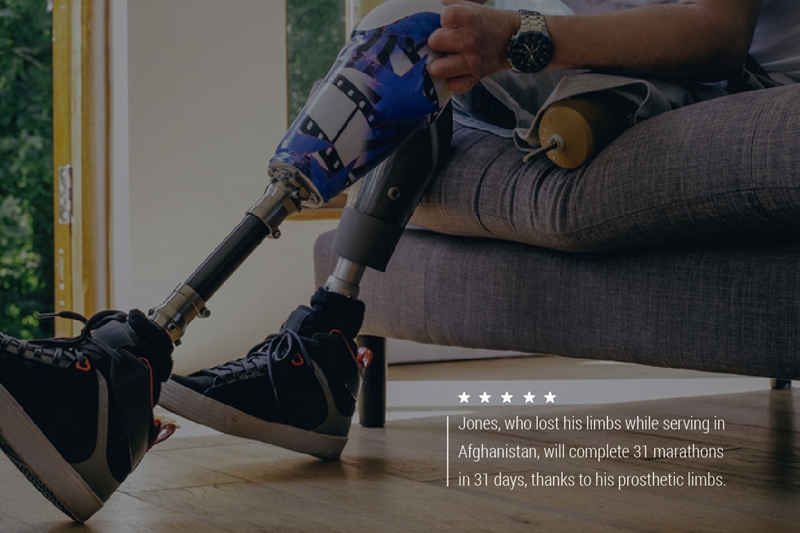
In 2010, Jones, then a corporal in the Marine Corps, was looking for IEDs with a metal detector while stationed in Afghanistan. A mine exploded beneath him during the search, and both his legs had to be amputated just below the knee. Though he could no longer serve, Jones was eager to get active again after his injury. He not only relearned to walk with his prosthetic limbs but also to run, row and bike. His determination paid off; Jones won a bronze medal for rowing at the Paralympics in 2012 and biked cross country in 2013.
His current series of marathons began Oct. 12, and he'll complete his final race on Nov. 11 – Veterans Day – in Washington D.C. Jones, who noted veteran suicides are often driven by isolation and the challenge of returning to civilian life, hopes his story will inspire others who are struggling.
"Hopefully when a veteran sees that I was able to lose both legs above the knee and still have a purpose, still be a part of society, still contribute to my family, they can picture themselves doing it," he said to Time Magazine.
A retired Army specialist receives free home during Veterans Day Parade
According to a local ABC News affiliate, the 2015 San Francisco Veterans Day Parade came with a life-changing surprise for a retired army specialist. During the event, Jonathan Allen, who had to leave the military after an injury, and his wife were gifted a free house with the mortgage fully paid for. The home was donated to Military Warriors Support Foundation, a nonprofit that helps wounded servicemembers transition to civilian life, by Wells Fargo.
In order to be eligible for a free home, the Allens had to first go through a financial mentoring program. Although they were selected to receive the gift, they weren't aware of the surprise until it was delivered to them. The couple then got to ride through the parade in a horse-drawn stagecoach provided by the bank.
"It's life-changing honestly," Allen told the news affiliate. "I'm trying to make the transition out of the Military. I'm going to school, wasn't planning to get out of the Military then I got injured."
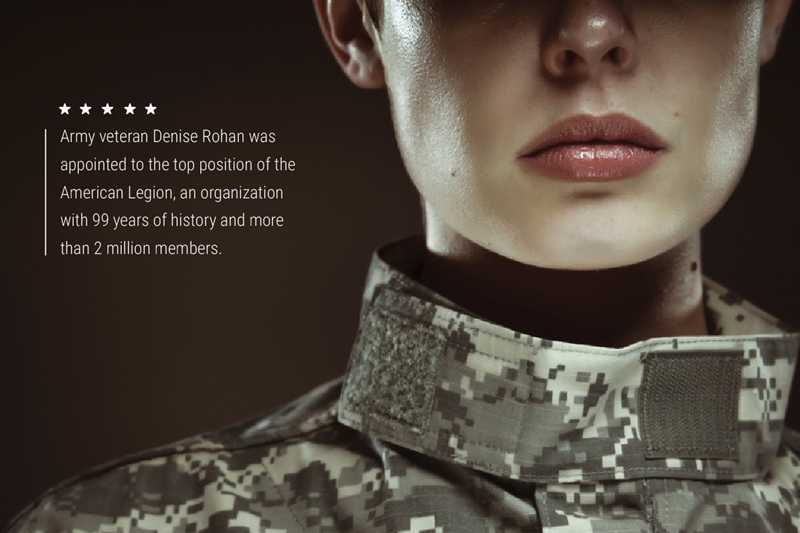
Recently, two legacy veterans organizations elected their first female commanders. Army veteran Denise Rohan was appointed to the top position of the American Legion, an organization with 99 years of history and more than 2 million members. That same month, Delphine Metcalf-Foster was voted commander of Disabled American Veterans, which is slightly younger than the Legion and has approximately 1.7 million members. The two join Mary Stout, former female commander of the Vietnam Veterans of America, as the only women to lead a major national veteran's issues group, according to Military.com.
Denise Rohan: A veteran originally turned away
According to her official biography, Rohan left her Iowa hometown in 1974 to complete basic training at Fort McClellan, Alabama. She was honorably discharged in 1976, but not before meeting her husband, Mike.
During her speech at the Legion's annual convention in Reno, Nevada, this past August, Rohan recalled how she came to be a part of the organization. A recruiter came to her home in 1980 to convince her husband to join the local chapter. Rohan asked about joining herself but was told to contact the American Legion Auxiliary – a group for veteran's spouses – instead.
That incident did not stop her, however. Four years later, Rohan joined the Legion chapter in Sun Prairie, Wisconsin. She served various leadership positions before her current appointment as commander.
"When our organization was started back in 1919, our founders said, 'A veteran is a veteran,' Rohan said during her speech, according to Military.com. "So ever since then, women have been part of our organization. Women could vote for national commander of the American Legion before they could vote for president of the United States, and there are females leading this organization across the nation."
Delphine Metcalf-Foster: Advocating for women's health
Metcalf-Foster's father passed away when she was 7 years old, but his stories about his time as a Buffalo soldier stuck with her. She joined the army as a nurse at age 34, serving 21 years before suffering nerve damage in 1991. One year later, a DAV representative spoke to Metcalf-Foster and her fellow servicemembers about the organization, and she decided to join. She became the first female commander of the DAV's California branch in 2004 and, according to The Vallejo Times-Herald, was awarded Veteran of the Year by former congressional representative George Miller in 2009.
"As a female, disabled, combat veteran Delphine brings to her new position as the National Commander of DAV a truly unique set of skills and a broad base of knowledge that will be a tremendous asset to all," George Miller told the newspaper.
The issues at hand
Each of the newly elected officials will focus on specific veteran's issues during their tenure. Inspired by an incident in her own life, Metcalf-Foster said she wanted to highlight issues within the Department of Veterans Affairs that are specific to women. She once went to the VA for a knee replacement but wasn't given a female-specific prosthetic. Metcalf-Foster also plans to continue DAV's efforts to extend VA caregiver benefits to people injured before 9/11.
Rohan also intends to use her new position to further work with the VA. During an interview with NPR, she acknowledged that many veterans don't have access to proper care from the government organization, especially those in rural areas. However, she noted the Legion is opposed to privatization and would prefer to work with the VA to ensure all veterans get the care they need. She also discussed this year's theme for the Legion, which is "Family First."
The appointment of Rohan and Metcalf-Foster marks a significant moment in American veteran history. The two are evidence that women's contributions to the military are not to be discounted, and that they are just as capable and deserving of leadership as their male peers.
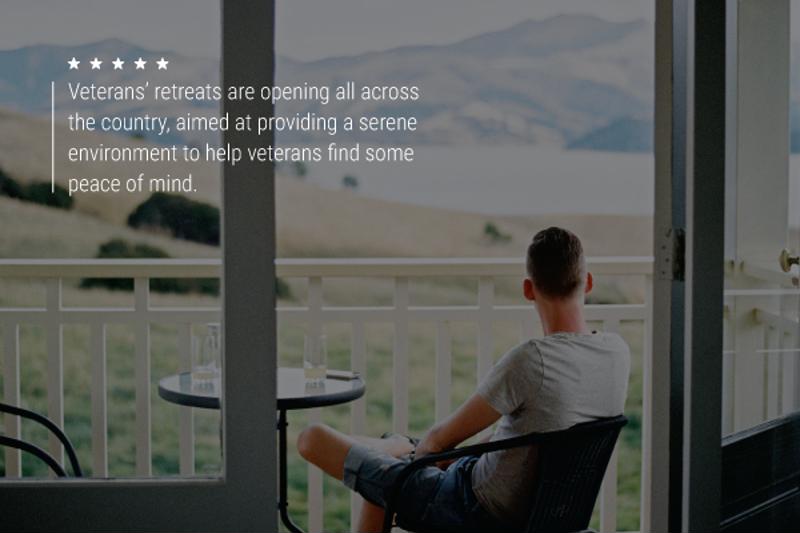
With all that veterans do and sacrifice to defend the country, these brave men and women need a place to recharge their batteries when they return home. In response to this need, veterans retreats are opening all across the country, aimed at providing a serene environment to help veterans find some peace of mind. Many communities even host fundraising events to assist veterans in covering the cost of a stay at the retreat.
Why veterans retreats are important
Being an active duty service member can be a grueling and exhausting experience. This is compounded when soldiers enter into combat zones, come under fire from enemy troops or live through other dangerous situations. Due to this, many returning troops come back from deployment with physical and emotional tolls that need to be addressed. Whether soldiers come home with a life-long disability, or suffer from Post-Traumatic Stress Disorder, it's important that they seek out the best ways to heal their body and mind.
In some instances, veterans rely on medication to help them deal with depression, anxiety, sleeplessness and physical pain. In addition to pharmaceutical solutions, veterans retreats offer a complementary way to help these individuals with the healing process.
What kinds of veterans retreats exist?
In recent years, there's been a surge in the number of retreat options for veterans, with many of them focusing specifically on a particular subset or group of veterans, such as disabled soldiers or those with families.
For instance, Operation We Are Here lists more than 60 different retreats all geared solely for veterans that provide support for caregivers, female veterans, PTSD, civilian reintegration, traumatic brain injury (TBI) and wounded warriors. These retreats come with a range of therapeutic opportunities at certain locations, including:
- Biking
- Horseback riding
- Farming
- Golfing
- Hyperbarbic oxygen therapy (HBOT)
- Healing arts (art, dance, film, theater, writing)
- Music
- Outdoor activities (white water rafting, scuba diving, sporting events, fishing, etc)
- Service dogs, therapy dogs and companion pets
- Volunteering and community service
While some veterans retreats do cost money, a large percentage of them are absolutely free for veterans, and sometimes for their families too. Each one focuses on its singular mission, which means there are specific retreats for nearly all aspects of life. Similarly, each location is unique.
"A large number of veterans retreats are actually free."
One example, Project Sanctuary, aims to help veterans transition from battle-ready to family-ready by addressing three areas: counseling, education and therapeutic recreation.
Another retreat, a 277-acre property in Franklinville, New Jersey, is currently building 60 microhousing units (tiny houses) for veterans to spend 24 months at the compound and rehabilitate themselves upon their return from deployment. The retreat, which its founder, Donnie Davis, intends to be free of charge for veterans, will also provide soldiers with work skills and the opportunity to undergo equine therapy.
Many retreats cater specifically to wounded veterans, but each one brings its own unique perspective to this endeavor. For instance, veterans who like to be active can check out Combat Veterans Sports Foundation, which provides wounded combat veterans with the opportunity to volunteer through professional sports organizations. Another, Fairways for Warriors, offers golf equipment, instructions and outings for wounded veterans and their families.
While many soldiers will no doubt say they don't know the meaning of the word "retreat" in the context of a battle, there are plenty of ways attending a retreat can help heal these individuals, both physically and emotionally.
The U.S. Department of Defense recently introduced the new and improved Blended Military Retirement Plan. There are some significant changes to the system and calculating the difference between the old and new military retirements plan might be a difficult endeavor for current service members.
Let's shed some light on the new BRP: What is it, who's impacted by it, and how do you navigate the new system.
How big is the change?
The upgrade isn't a minor tweak of the military's current retirement system, rather it's a sweeping disruption. Anthony Kurta, who is performing the duties of undersecretary of defense for personnel and readiness, spoke with Pentagon reporters about this key step in modernizing the military's retirement system to more closely align with similar private-sector plans.
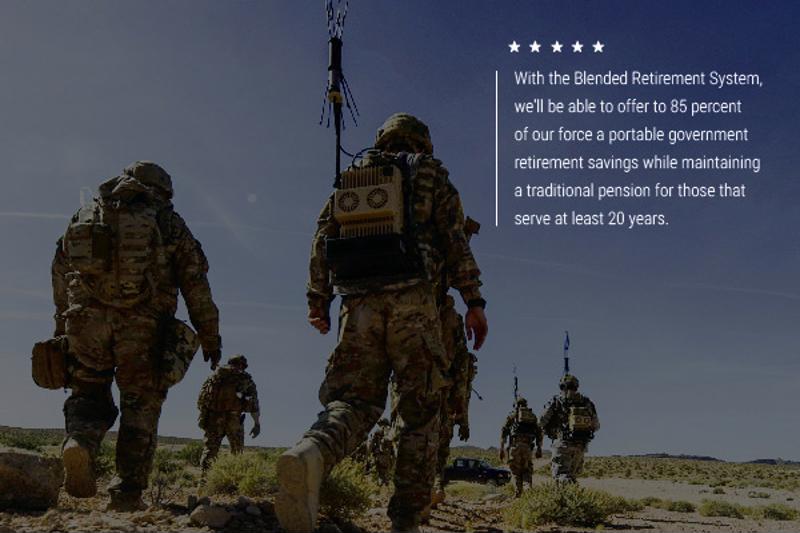
"[The new military retirement system is] one of the most significant changes to military pay and benefits that we've ever had over the past 70 years," explained Kurta. "We'll now be able to offer to 85 percent of our force a portable government retirement savings while still maintaining a traditional pension for those that serve at least 20 years."
What is the Blended Military Retirement Plan?
Now that we know it's a pretty big deal, let's dive into what the changes mean. The 2017 National Defense Authorization Act (NDAA) originally introduced the change that will affect all new entrants to the military as of Jan. 1, 2018. The change, known as the Blended Retirement System, is a dramatic departure from the military's current retirement plan. As it stands, immediately upon retirement, the military awards 50 percent of base pay as a pension for qualifying services, according to Military Times.
"The new system merges a defined benefit plan with a defined contribution plan."
However, the new Blended Retirement System merges the defined benefit plan with a defined contribution plan, which is similar to a 401(k). Dubbed the Thrift Savings Plan, this feature will add up to a 5 percent match on all personal contributions to the plan.
Who's impacted by the change?
Anyone who joined the military before 2006 is automatically grandfathered into the old system. Meanwhile, anyone who joins in 2018 or beyond will be covered by the new system. However, active duty service members with between one and 12 years must decide between either the old system or the new system. This is no easy decision, yet about 1.15 million service members, or roughly 88 percent of all active duty military, fall into this third category.
How to navigate the new system
Thankfully, active duty service members don't have to make their decision immediately – they'll have one year to make a choice on which plan they'll want to use. This provides ample time to speak with support groups, such as family and friends, consult with an accountant or other wealth management advisors and make an informed decision about the best path forward.
To assist in the decision-making process, the military rolled out a Blended Retirement Service Comparison Calculator designed to assist eligible service members in their efforts to compare and contrast the new and old systems.
It will be crucial for those active duty military members who will be impacted by this change to review the Blended Retirement System to ensure they fully understand the changes and they make the most informed decision on the fate of their retirement.